ERCOT’s 85 GW load forecast for Winter Storm Fern wasn't just high—it was indefensible
We’re one month removed from the havoc that was Winter Storm Fern. Focusing on its effects in ERCOT, we dug into the weather, grid, and market fundamentals to provide six strategic insights:
1. Five days out, temperature forecasts disagreed about timing and intensity but were reasonably correct about the event low/peak heating period on 1/26. While the peak heating event was relatively extreme, in this particular case it wasn’t much of a short-term surprise. In terms of long-run climatology though, the peak heating event on 1/26 was a P99 event for that calendar day, the week was a P97 and the month was P65.
2. ERCOT appears to have deliberately biased their load forecasts high (incorrectly). Assuming ERCOT was using weather forecast consensus (which was relatively accurate) as the input, we find their 85 GW forecast for 1/26 and 80 GW forecast for 1/27 to be essentially indefensible, falling well outside the range of recent weather-load relationships.
3. ERCOT appears to have deliberately biased wind generation forecasts low (correctly). We know this because their STWPP forecast (representing a P50 level) was below their WGRPP forecast (representing a P20 level). They appear to have manually adjusted the STWPP low but left the WGRPP alone, creating a mathematically impossible scenario.
4. Load in West Texas was significantly affected by icing of oil and gas infrastructure. A large share of load growth in West Texas has been driven by the electrification of oil and gas drilling and processing. When these wells/pipes froze, the associated electrical compression didn’t operate, resulting in exceptionally low load.
5. The market result: a high day-ahead (DA) clear driven by ERCOT’s posturing and then a real-time (RT) fail due to reality and load destruction. ERCOT’s posturing appeared to have the intended effect, supporting a high DA clear with ample reserves to blunt the risk of RT market capacity shortfalls — even in the face of lower than expected wind.
6. Sunairio’s price forecast explained the actual realization and the advanced market fear premium. Looking at our forecast of the 1/26 5x16 North Hub locational marginal pricing (LMP) realizations from the week before, we can see that our expected value was almost spot on, while the long tail to the right explains why some were willing to pay $600+ (because there was a small chance of clearing over $1,000). Note: the mean of our price distribution was at the 80th percentile — far from the median — because of the extreme right skew (risk of high prices).
Sunairio ONE In-depth Part 3: Beyond the Patchwork: Achieving Seamless 15-Year Hourly Ensemble Forecasting
Over the past few weeks, we have explored what makes Sunairio ONE a "next-generation" forecast. In Part 1, we discussed the necessity of a calibrated ensemble that accurately captures extremes. In Part 2, we demonstrated why high spatial and temporal resolution is critical for modeling modern renewable assets like wind and solar. In this final installment, we show that Sunairio ONE provides a unified, seamless outlook from hours to years, eliminating the fragmentation issues that the industry faces today.
The Current Landscape: A Patchwork of Compromises
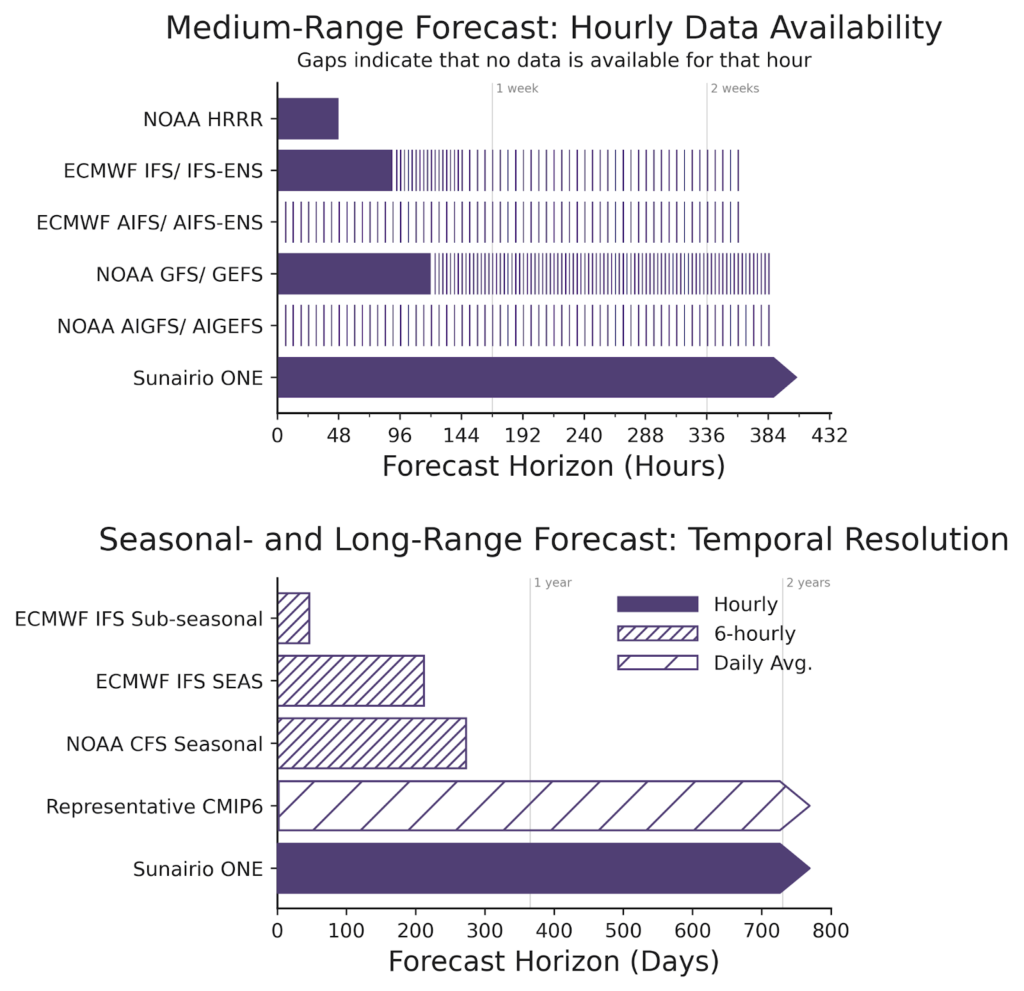
Today, energy traders, grid operators, and other energy professionals have access to a growing collection of public weather forecasts that are each published with differing outlook horizons, temporal resolutions, and refresh schedules.For example, NOAA’s HRRR provides hourly forecasts for the next two days. Other forecasts, such as the GFS or ECMWF’s IFS, stretch to about 2 weeks, but with lower temporal resolution further in the outlook period (see Figure 1, top panel). Seasonal-range forecasts such as the CFS or IFS SEAS look many months into the future, but are low temporal resolution (see Figure 1, bottom panel) and in the case of the SEAS, published only once per month, letting forecasts go stale quickly. While most weather forecasts are updated just four times per day (e.g., 00Z, 06Z, 12Z, and 18Z) or fewer, Sunairio ONE is refreshed each hour using the latest information.
To look beyond 9 months, one must turn to climate models (the current iteration of models are known as CMIP6) instead of weather forecasts, which can be significantly biased, typically provide only vague daily averages, and obscure intraday volatility.
Figure 1. (Top panel) Even within a short 16-day outlook, alternative forecasts provide sparse data with low temporal resolution across days while Sunairio ONE provides dense hourly data without gaps; (Bottom panel) For seasonal or longer outlook periods, only Sunairio ONE provides hourly data.
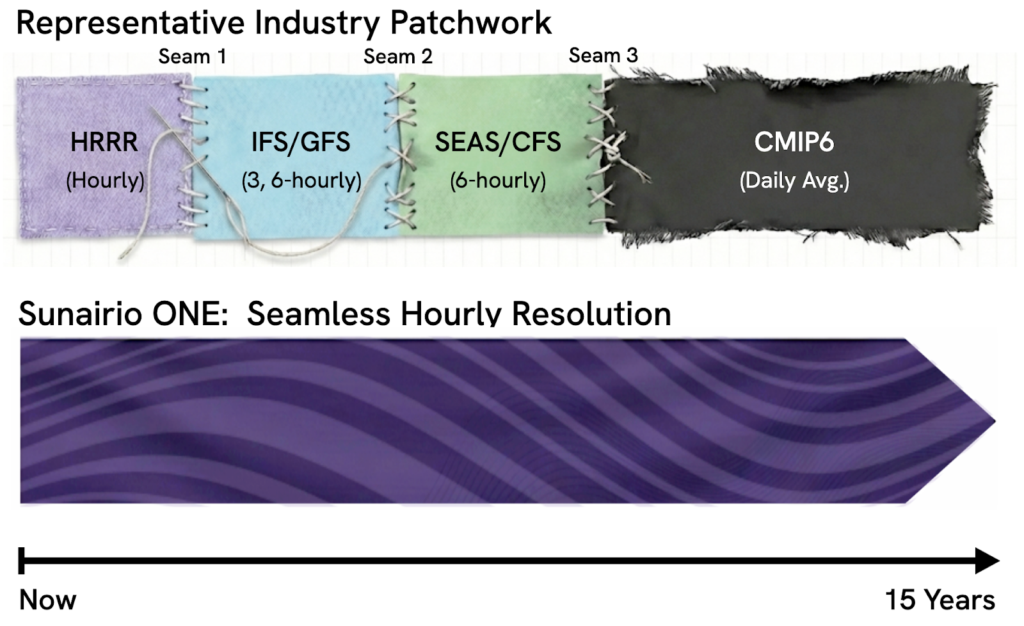
Thus, in order to build a complete picture of future weather risk– both in the short-term and in long-term planning– energy traders and asset managersneed to stitch together information across multiple sources in a patchwork manner as illustrated in Figure 2. This fragmented approach requires building multiple complex data pipelines, and perhaps more importantly, it makes it challenging to synthesize insights for key operational and planning decisions. Sunairio ONE provides the seamless solution that the industry needs.
Figure 2. The standard industry approach involves stitching together different models with varying resolutions, creating data "seams" and leaving a massive void for long-term planning. Sunairio ONE provides a seamless long-term outlook.
The Sunairio ONE Advantage: The Unbroken Line
Sunairio ONE was designed to eliminate the seams that exist when moving across timescales, providing full continuity and high resolution.
How is it possible to generate a credible hourly ensemble forecast a decade in advance?
It requires bridging the gap between traditional numerical weather prediction (NWP) and long-term climate modeling. Sunairio ONE is not just "extending" a standard weather model until it falls apart. It utilizes a proprietary blend of physics-based modeling and AI-driven calibration.
As detailed in our overview of ENSO-informed climate simulations, our long-range ensembles are constrained by large-scale climate signals, such as El Niño and La Niña cycles. This ensures that the weather patterns generated in years 5, 10, or 15 are physically consistent with the broader climate realities expected during those periods, while still providing the hourly volatility required for asset modeling.
The Business Impact: Strategic Consistency
Moving from a fragmented patchwork to a seamless solution offers more than just technical convenience; it solves fundamental business problems:
Eliminating "Model Basis Risk": When a short-term trading desk uses one model and the term traders use another, the firm risks making operational decisions that contradict a strategic outlook. A unified model ensures everyone is reading from the same book.
Aligning Analytics with Market Contracts: Power markets operate on financial timelines (e.g., balance-of-month (balmo), seasonal (summer/winter), and annual contracts) that frequently collide with the rigid boundaries of standard weather forecasts. Sunairio ONE solves this misalignment by providing an unbroken, 15-year hourly stream.
Streamlined Data Pipelines: Data engineers no longer need to build complex intake systems to parse GRIB files from four different government agencies, normalize the data, and try to stitch it together. Sunairio ONE offers a single API feed and consistent timeseries format.
Accurate Long-Term Valuation: To value an energy asset over its lifecycle, modeling assessments need realistic forward-looking weather assumptions that replicate trends and volatility instead of simple historical averages. Sunairio ONE’s 15-year hourly ensemble captures trends, replicates extremes, and provides the necessary fidelity for accurate long-term financial modeling.
The Future of the Grid is Unified
Over this three-part blog series, we have outlined why the energy transition demands a new class of forecast technology. The grid of the future cannot run on forecasts that fail to see extremes, lack necessary resolution, or fragment after two weeks.
Sunairio ONE delivers unprecedented fidelity at all time scales. It is calibrated, sharp, high-resolution, and, crucially, seamless. It’s time to stop stitching together forecast models and start solving energy challenges with a unified view of the future.To see the difference seamless data can make for your organization, contact us today for a demonstration of the Sunairio ONE 15-year hourly ensemble.
Sunairio ONE In-depth Part 2: Resolution Matters
This is the second blog post in our three-part series that explores key areas where Sunairio’s Omniscale Next-generation Ensemble (ONE) forecast model outperforms traditional solutions. Our first blog post demonstrated that Sunairio ONE was more calibrated, sharp, and extremes-conspicuous than legacy ensemble methods. Here, we show that Sunairio ONE’s high spatial resolution captures local variability of wind speeds better than existing models and demonstrate how that wind speed gradient can translate to a large variation in expected power output.
Introduction
Variable renewable energy assets like utility-scale wind and solar farms experience meaningful fluctuations in power output as local weather conditions change. However, most weather forecasts aren’t generated at a spatial or temporal granularity that’s sufficient to accurately anticipate those dynamics. In the case of wind, for example, detailed topographical features and their resulting phenomena (e.g., terrain-induced waking or speed-up effects) are lost at coarse resolutions1. Sunairio ONE addresses these challenges by providing a high resolution weather forecast, which captures small-scale variability, enabling best-in-class asset-level generation potential forecasts.
Wind farm forecasting best practices
Asset-level wind energy forecasting requires both highly-accurate weather forecasts of mesoscale wind (on the order of a few km) and sophisticated models of wind field dynamics within the wind farm footprint, which are affected by many factors including terrain, vegetation cover, and turbine waking.
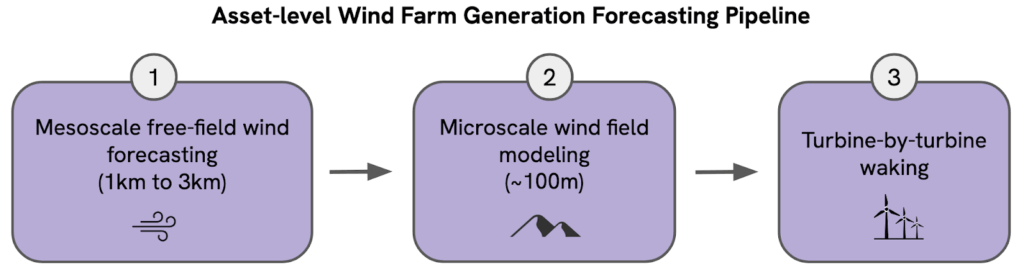
In fact, we find that wind energy modeling best practices dictate separating this problem into three stages: 1) the mesoscale free-field wind2 forecast, 2) the microscale wind field within the wind farm footprint (less than 1km effects usually influenced by terrain), and 3) turbine-by-turbine waking (Figure 1).
Figure 1. Diagram showing three mains steps involved in accurate modeling wind energy at a wind farm.
We are now excited to leverage Sunairio ONE, our high-resolution ensemble weather forecast, to improve mesoscale wind forecasting for asset-level generation.
Existing weather forecasts are too coarse, or fine-but with limited outlook
Surveying the landscape of publicly available weather models that can provide mesoscale free-field wind forecasts shows that none offer truly high spatial and temporal resolution output that extend beyond a few hours (Table 1). Furthermore, Figure 2 helps provide some scale to the current problem, comparing the spatial resolution of Sunairio ONE (at approximately 2km) and the IFS (at approximately 10km) against actual wind farm footprints in ERCOT. Mesoscale forecasting at 10km (like the IFS) vs. 2km may average out important wind gradients that vary over a wind farm and lead to exponential wind generation errors (more on this below).
Additionally, Sunairio ONE forecasts are generated at hourly temporal resolution–critical for energy forecasting applications–for the full forecast period; no other major publicly available forecast model does this. For example, the IFS starts at hourly resolution for the first three to four days but then drops to 3-hourly and 6-hourly steps as it gets further out.
0-90 at 1-hourly 93-144 at 3-hourly 150-360 at 6-hourly
0.1°
~10km
AIFS/AIFS ENS (ECMWF)
15 days
0-360 at 6-hourly
0.25°
~28km
Sunairio ONE
15 years
1-hourly
0.02°
~2km
Table 1. Comparison of forecast models by outlook period, temporal resolution, and spatial resolution.
Figure 2. Zoomed area of map of wind farms in Texas (shaded bounding boxes show footprints of wind turbines at wind farms).
Wind is highly variable across wind farm scales
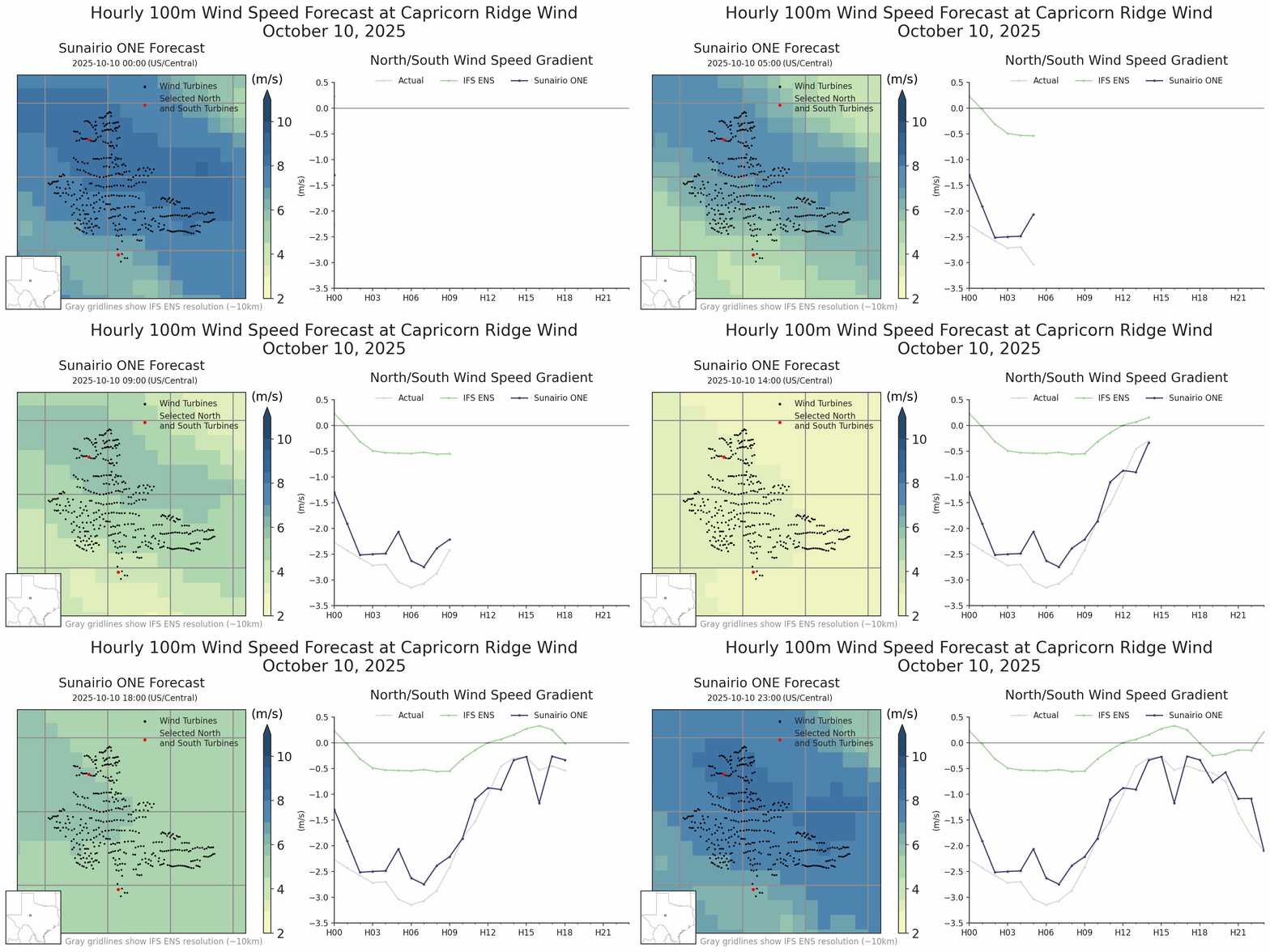
To visualize just how important it is to capture variations in free-field wind forecasts, we analyzed a day of wind forecast performance (three days out) between Sunairio ONE and the IFS across a major ERCOT wind farm, Capricorn Ridge. As Figure 3 shows, the difference between wind speeds at the north end of the farm compared to the south end (turbines marked in red in left panel) were as great as 3 m/s in some hours. While Sunairio ONE successfully forecasted this wind field gradient (right panel), the lower-resolution IFS could not resolve the proper dynamics, instead seeing a fairly uniform wind field.
Figure 3. (Left panel): Map of Sunairio ONE forecasted wind speed across a wind farm in Texas over a 24-hour period; (Right panel): Line plot tracking the wind speed gradient (i.e., difference in wind speeds) from the north side to the south side of the farm compared toSunairio ONE 3-day ahead forecast and IFS ENS 3-day ahead forecast.
Why it all matters: Even seemingly minor weather variations can have outsized impacts in power output
Does a 3 m/s gradient in free-field wind speed over a wind farm really matter? Depending on the absolute wind speed levels, it can matter immensely. Below their rated capacity, wind turbine power output scales cubically with wind speed which causes even seemingly minor variations in wind speed to lead to large differences in generation potential. Turning to Figure 4, we plot an example power curve of a 1.5 MW turbine, which represents the majority of turbines at Capricorn Ridge. A difference of 3 m/s in wind speed can translate to up to a 959 kW delta in power output, or 64% of rated capacity!
Figure 4. Power curve for the 1.5 MW wind turbines that comprise the Capricorn Ridge Farm. 3 m/s wind speed gradients can translate to power differences as large as 959 kW.
Over a wind farm with hundreds of turbines, the impact of modeling wind speeds at a lower resolution on generation potential forecast performance can quickly add up.
Conclusion
Accurately forecasting local wind speeds is essential for creating reliable forecasts of asset-level generation. Sunairio ONE provides 2km spatial resolution, hourly temporal resolution forecasts that are ideally suited to serve as the critical free-field wind forecast step in wind farm generation modeling pipelines.
Free-field wind speeds are wind speeds expected in open, unobstructed areas free of turbulence caused by structures such as wind turbines. ↩︎
The HRRR goes out to 48 hours only for the 0Z, 6Z, 12Z, and 18Z initializations. All other initializations go out 18 hours. ↩︎
Increased solar generation is shifting price risk later into evening in PJM
Late last month, on June 24, 2025, PJM experienced a record-setting heatwave that sent heat indexes soaring above 100oF throughout the Mid-Atlantic, hotter than anything observed in late June since at least 1950. This extreme weather event sent regional power demand and prices spiking — though not at the same time.
The price spike occurred in the two hours after demand peaked that day — a (perhaps unexpected) consequence of the growing reliance on renewables in PJM. Here's how solar fundamentally changed PJM's risk profile on that sweltering June day.
How net load drives grid stress and power prices
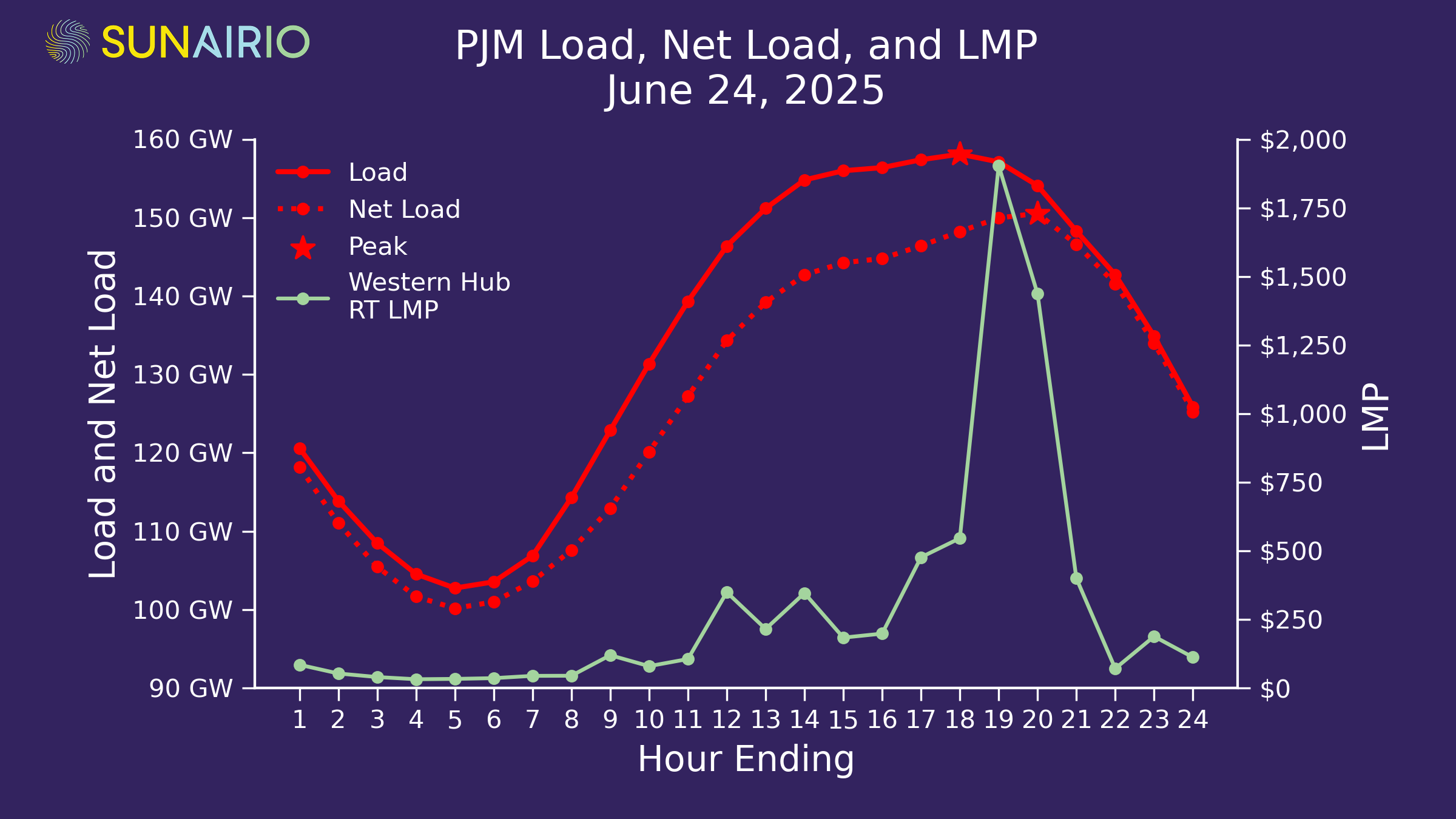
Net load — not native load — drives today’s price spikes. PJM native load peaked in hour ending (HE) 18, but Western Hub LMP spiked to $1,500/MWh+ in subsequent HE 19 and 20, as the plot in Figure 1 shows.
Why? Because those are the hours in which net load peaked. As we’ve discussed before, net load (native load minus renewables) is the primary driver of grid stress in power markets with a significant share of renewables. And when grid stress rises, so do prices.
We can now officially count PJM as a market in which renewables can’t be ignored.
Figure 1. PJM load, net load, and Western Hub LMP for June 24, 2025.
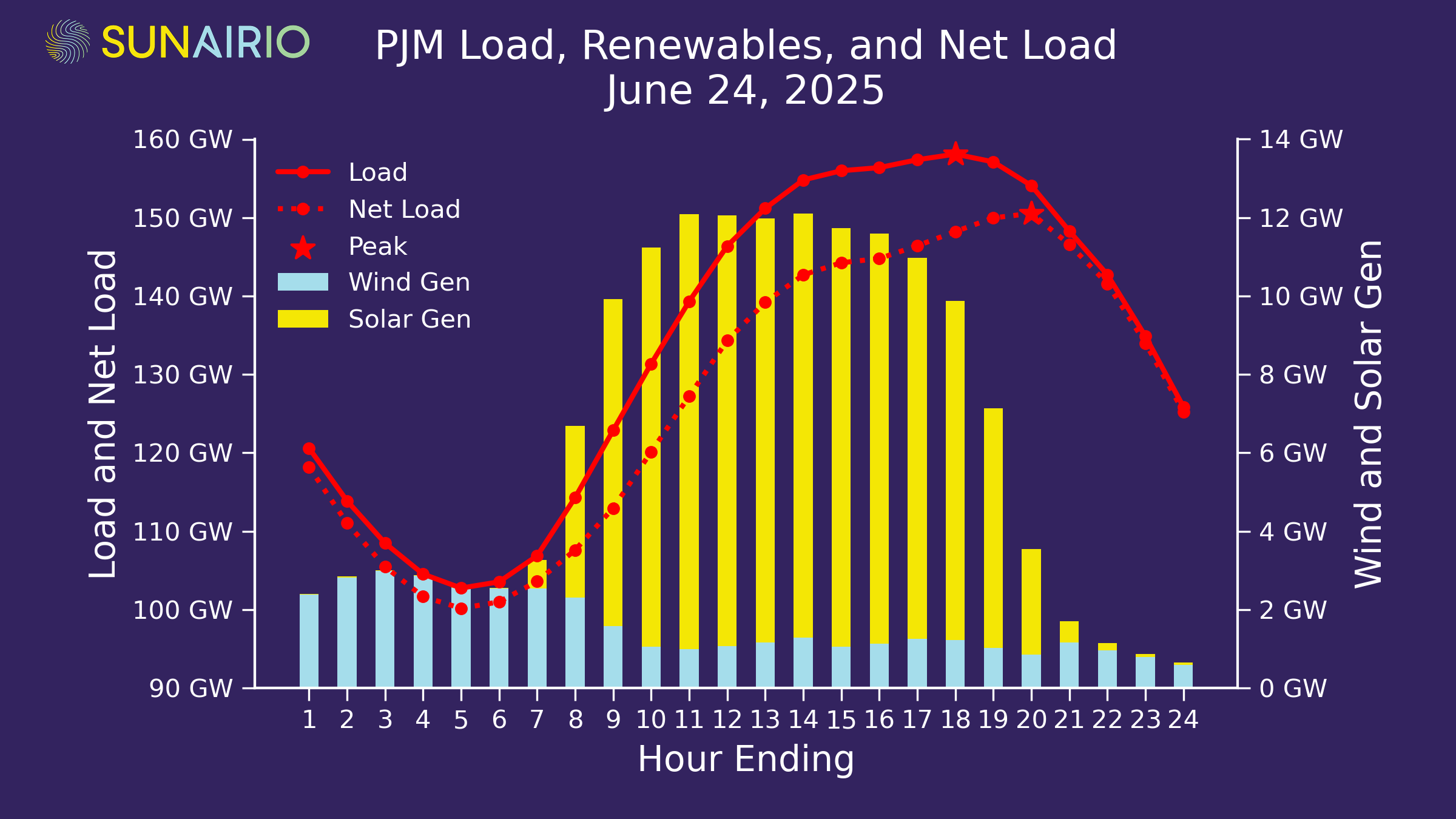
As Figure 2 shows, there was approximately 10 GW of solar generation in PJM on June 24 during hours 10–17, which significantly reduced net load — and therefore grid stress — throughout the day. Even in the peak load hour (HE 18) there was still 9 GW of solar generation.
But this solar output dropped precipitously as the sun set across the ISO footprint to just 3 GW in HE 20 — causing net load (and overall grid stress) to continue to rise even as native load was falling. The resulting net load ramp required PJM to quickly dispatch expensive units to stabilize the grid.
Figure 2. PJM load, wind generation, solar generation, and net load for June 24, 2025.
The end result? The highest prices we’ve seen in PJM since 2022 occurred much later in the day than would have been historically expected for this period in June.
Solar is shifting PJM fundamentals
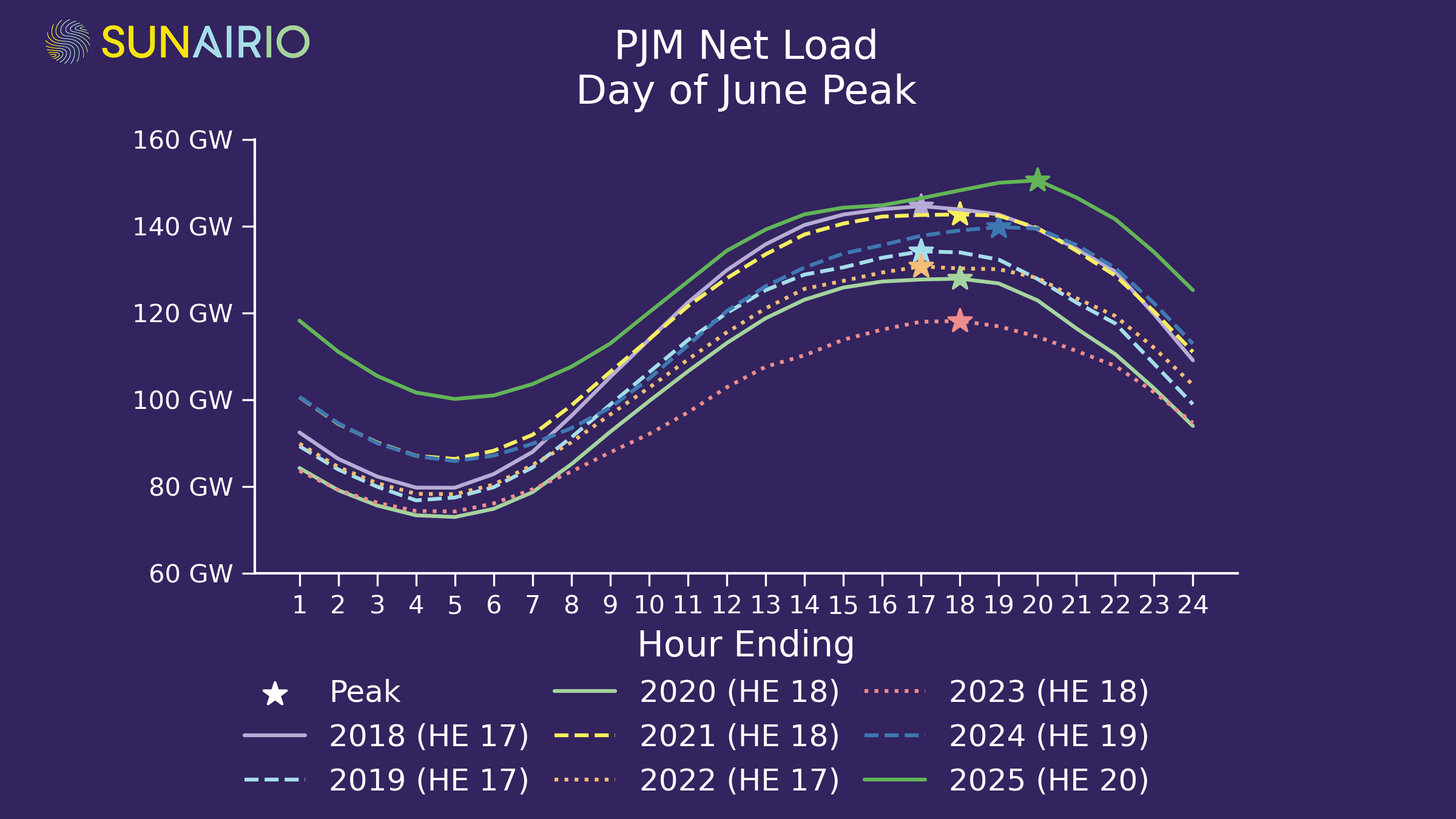
Peak net loads have been creeping later in the day for some time. The highest net load hour in June has shifted from HE 17 in 2018 and 2019 to HE 20 this year, as Figure 3 shows for each June’s highest net load day since 2018.
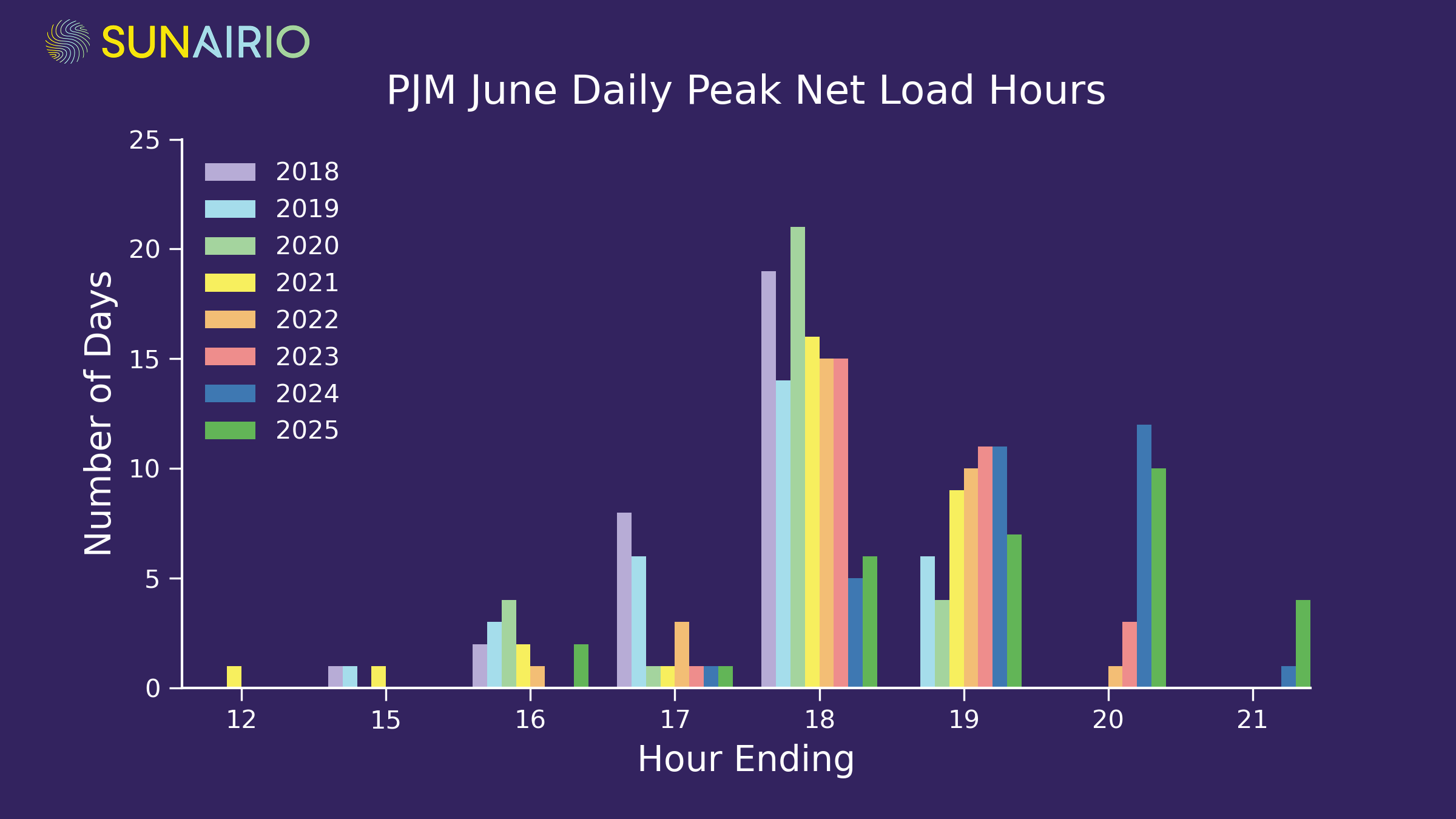
This pattern extends to less extreme days as well: 70% of daily net load peaks occurred at hour ending 19 or later in 2025 compared to 0% of peaks occurring that late in June 2018, as Figure 4 demonstrates across all June days since 2018.
Figure 3. Hourly net load for the highest net load day for each June from 2018–2025.Figure 4. Distribution of the hours that the highest net load hour occurred in over all days in the month of June, 2018–2025.
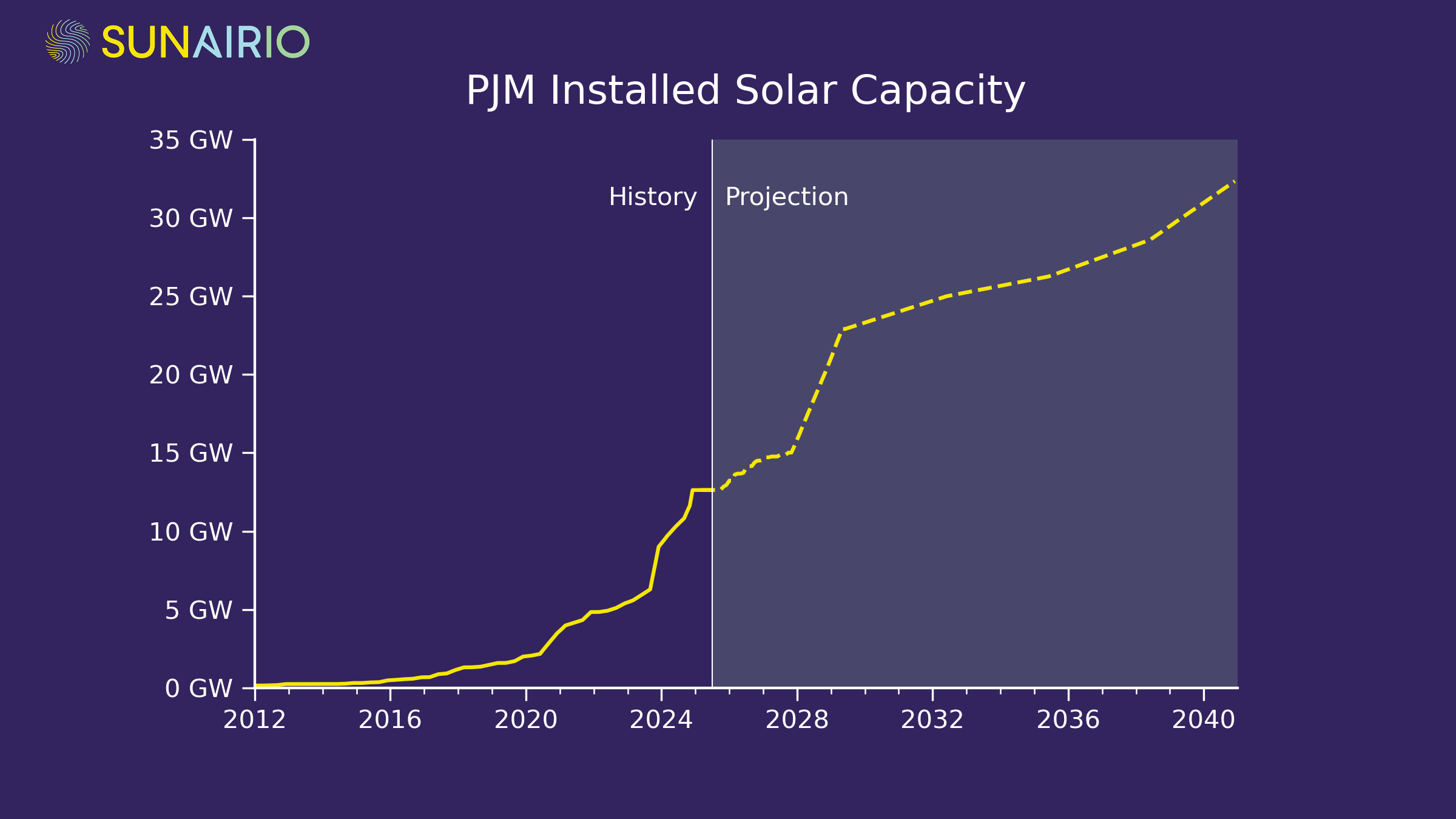
This intraday net load pattern shift mirrors the massive growth of installed solar capacity in PJM. Utility-scale solar capacity has increased roughly 500% since 2020, from 2 GW to more than 12 GW as of June 2025, as Figure 5 illustrates.
Figure 5. Historical and projected installed utility-scale solar capacity in PJM.
As solar penetration increases in PJM, it drives greater price volatility and concentrates the highest price risks later into the evening hours during summer months.
Fundamentally, it creates a grid management challenge as the quickly setting sun necessitates a steep ramp for other generators to be brought online. This highlights the need for accurate net demand (load, solar, and wind generation) forecasting and fast-ramping resources to successfully enable renewables integration.
Even with the headwinds that new solar projects face today, we still expect a sizable capacity addition over the next few years as projects that are under construction reach completion and the pipeline of projects that qualify for remaining tax incentives break ground.
The bottom line: add PJM to the list of power markets whose fundamental outcomes are increasingly controlled by the intraday volatility and intermittency of weather-driven generation resources.
Grid planners make decisions based on historical data. What happens when history doesn’t have the answers?
In modern electric grids, grid operators must continually balance power demand with power generation to maintain steady grid frequency and ensure overall grid stability. This entails anticipating, in real time, short-term weather-driven changes in both customer load and renewables output to match the remaining “net demand” with dispatchable generation. Grid planners, on the other hand, look far into the future to ensure long-term “resource adequacy” — i.e., that future generation resources will be sufficient to cover demand under all possible weather scenarios and grid conditions.
Satisfying resource adequacy through long-term grid planning processes is a critical component of grid reliability because generation resources and transmission infrastructure can’t be built in the few days ahead of a forecasted heat wave or winter storm.
To study long-term resource adequacy, grid planners:
Construct a set of future weather scenarios
Make some assumptions about asset-level availability
Calculate the resulting hourly net demand given anticipated customer load projections and renewable energy capacity buildout
Quantify the likelihood of capacity shortfalls that would necessitate shedding load to maintain grid stability (i.e., brownouts or blackouts)
Resource adequacy studies, in other words, rely on an accurate characterization of future weather variability. In practice, grid planners typically use historical weather as a proxy for future weather — tacitly assuming that a) future weather will be similar to historical weather and b) historical weather is a large enough sample to assess the risk of extreme events.
Unfortunately, both of these assumptions are wrong. Future weather is different from historical weather. Average temperatures, wind speeds, and irradiance are all expected to shift over time from climate change effects, to varying degrees and in different directions depending on what region is being studied. Moreover, the shape of weather distributions will also change. For example, climate modeling shows that extreme cold risks may actually become more frequent in the future as climate change weakens the jet stream — even though average temperatures will rise. That means that the bottom tail of a temperature distribution gets longer while the rest of the distribution shifts right.
Regarding the second assumption — that we have enough historical weather data to assess extremes — the historical record is much smaller than you might think.
First, we can only use serially-complete historical datasets that have values for every hour of the year because we can’t make reliable statistics from partial-year data. This generally excludes airport station temperature data before 1980.
Next, we have to find high-quality weather data to model wind and solar generation. Traditionally, that has meant relying on satellite-based irradiance data (available since 1998) and the NREL WIND Toolkit, which is a high-resolution wind speed dataset calculated for 2007-2013.
As a result, a resource adequacy study that includes correlated temperature-driven load, irradiance-driven solar generation, and wind-driven wind generation would only be able to call upon 7 historical year samples — drastically limiting the view of weather extremes that the grid could face.
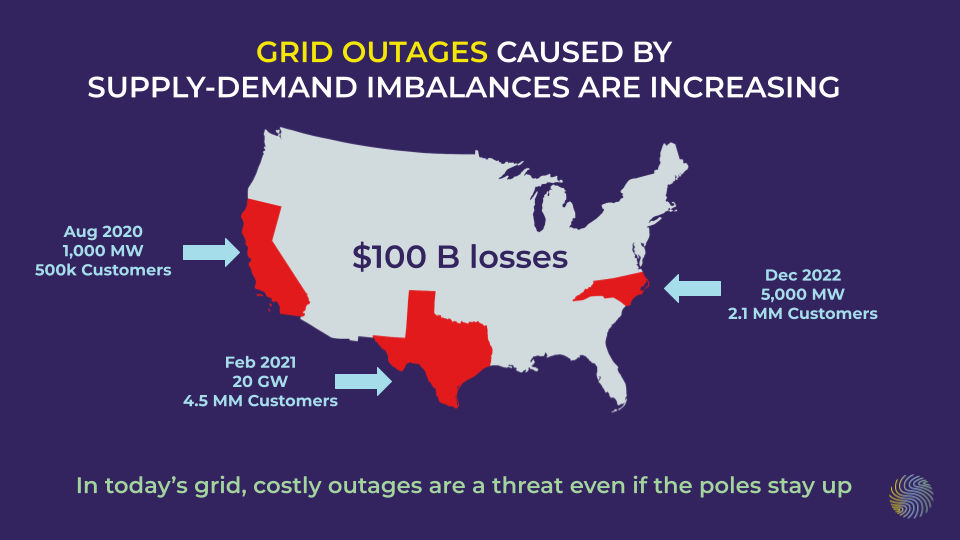
Sadly, flawed grid planning due to insufficient weather assumptions can lead to catastrophe, with major power outages occurring recently in California (2020), Texas (2021), and North Carolina (2022). An NREL post-mortem of all three events found modern electric grids, which increasingly rely on intermittent weather-dependent renewable energy generation, to be increasingly impacted by extreme weather conditions — and that “weather in recent years has exceeded the bounds of anticipated conditions,” highlighting the need for improved planning processes that accurately account for jointly correlated extremes of weather, power generation, and generation outages.
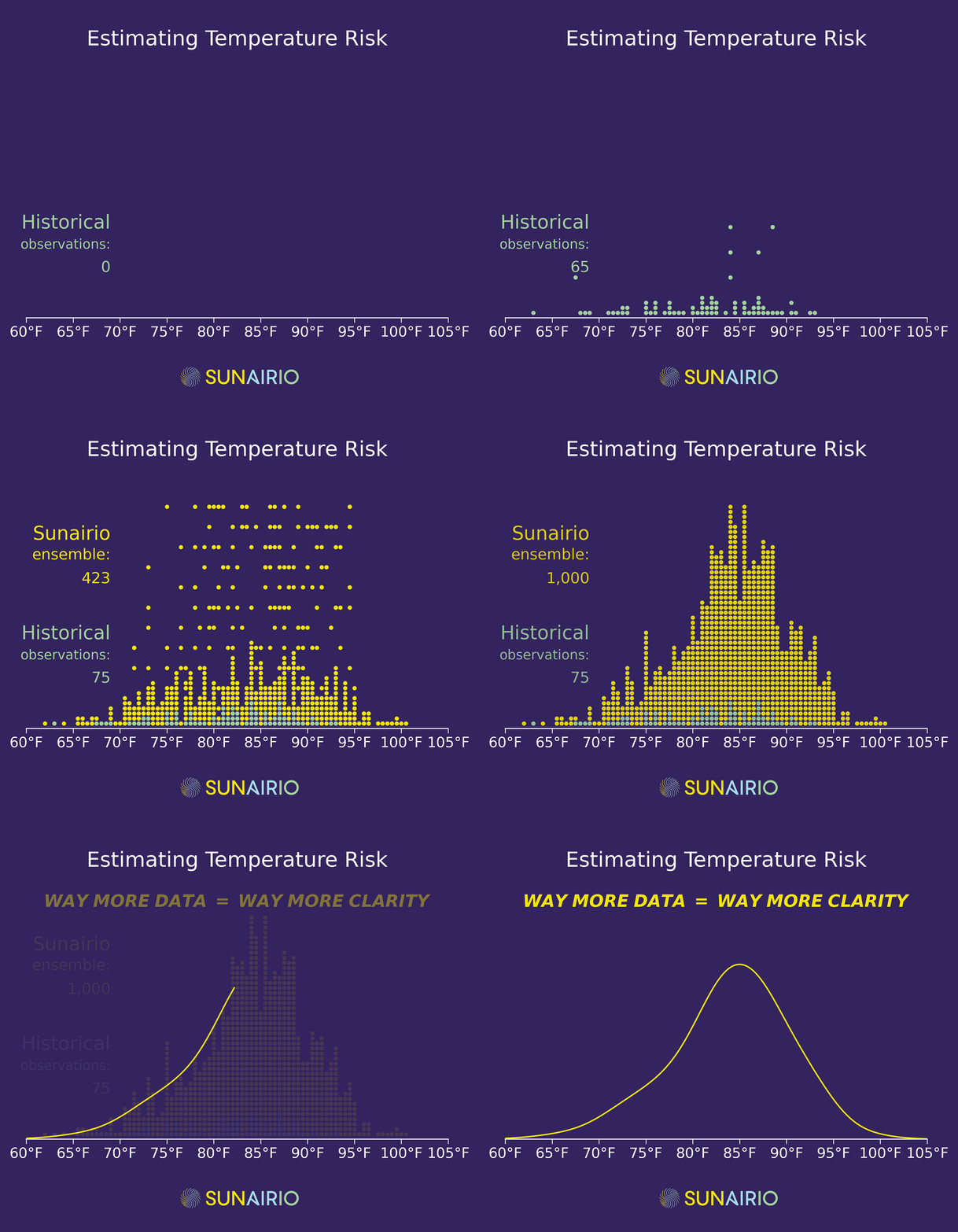
To fill this gap, Sunairio generates a 1,000-path ensemble of future hourly weather to give grid planners robust, complete, and actionable distributions of weather, grid conditions, and asset-level variability. This ensemble is climate-change adjusted, trained on the longest possible series of weather data, and numerous enough to gain intelligence into future extreme events — in whatever form they may come.
Spring weather is volatile. So are power markets. 2025 is no exception.
For plants, spring is a season of growth. But for power market participants and grid operators, it’s a time of surprises and volatility.
While typically mild spring weather results in low expected grid demand, extreme spring weather — through a confluence of factors — can drive real-world hourly grid balances to levels that approach or exceed emergency conditions. This contrast between mostly moderate days and acute periods of serious grid stress makes spring just as challenging to navigate as the traditional “peak” seasons in summer and winter.
Properly anticipating this inherently stochastic risk requires both a nuanced understanding of the underlying fundamentals and a probabilistic framework to quantify low-probability but high-impact economic and reliability outcomes. In this blog post, we examine actual weather, grid, and market events from this spring in ERCOT within a probabilistic context. Looking ahead to spring 2026, we then explore how rapidly changing grid fundamentals may alter next year’s spring grid risk profile.
Late season cold and an early heat scare in Texas
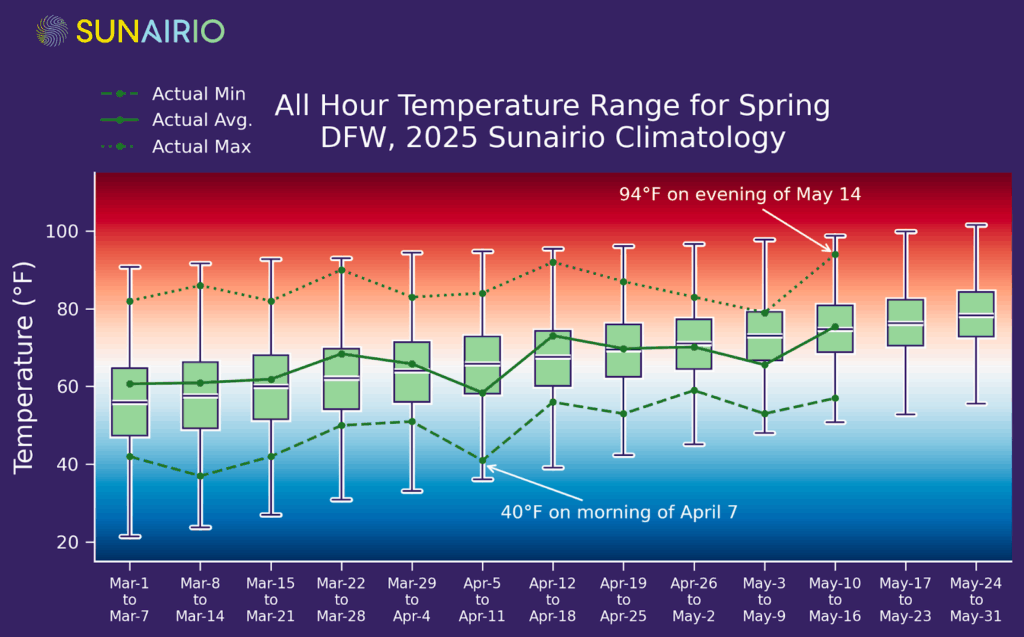
This year has not been an exception to the rule that spring weather varies wildly. Temperatures on April 7 dropped to 40ºF at DFW and into the 30s around Dallas (colder than all of March) while an early season heat wave drove forecast highs over 100ºF last week (levels not typically seen until July).
Figure 1 plots this spring’s weekly average, minimum, and maximum temperatures (green lines) against ranges derived from Sunairio probabilistic climatology (box and whisker plots) at DFW. As the plot shows, most hourly temperatures throughout spring are relatively mild — between 50ºF and 70ºF — but extremes dip into freezing territory and extend into severe heat.
Figure 1. Sunairio probabilistic climatology temperature ranges (box and whisker plots) vs actual average, min, and max weekly temperatures (lines). Background gradient represents cold (blue), comfortable (white), and hot (red) temperatures.
An epic forecast fail
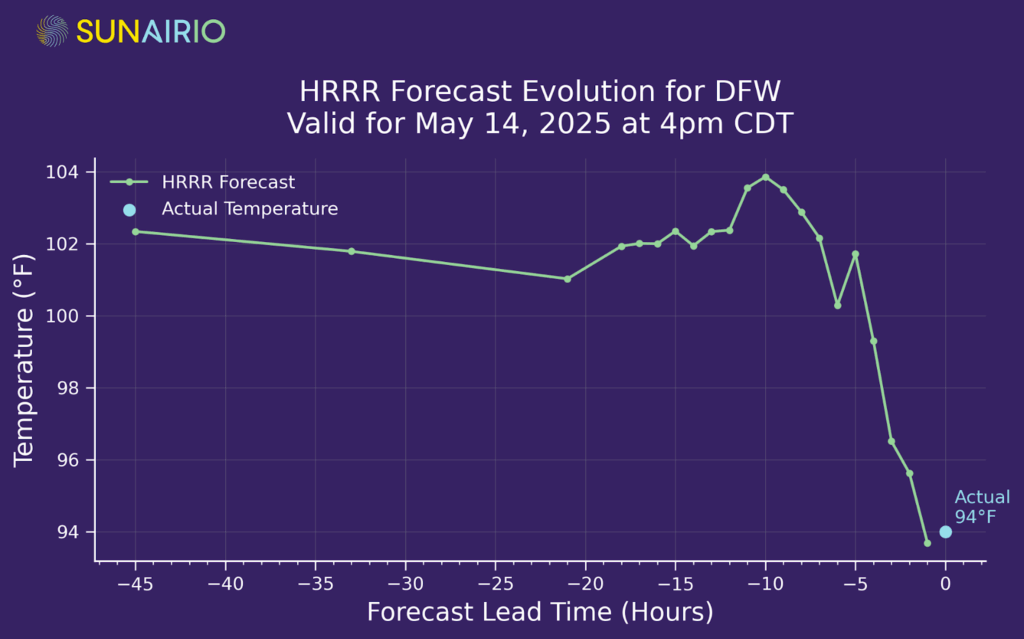
Temperatures could have been even more extreme this year if the weather forecasts for the May 12 week hadn’t flopped. As we see in Figure 2, the forecast for the May 14 afternoon high at DFW was 102ºF just 12 hours out — yet realized 8 degrees lower at 94ºF. That 8-degree temperature forecast error likely reduced ERCOT RTO load by approximately 9 GW versus higher temp load expectations, leading to a $40 Day-ahead/Real-time spread (DA higher than RT) — highlighting the difficulties of navigating grids amid temperature variability and forecast uncertainty.
Figure 2. The forecast evolution for the afternoon high temperature at DFW on May 14 from NOAA’s High Resolution Rapid Refresh (HRRR) model — a high-resolution, short-term forecast.
Generation outages peak
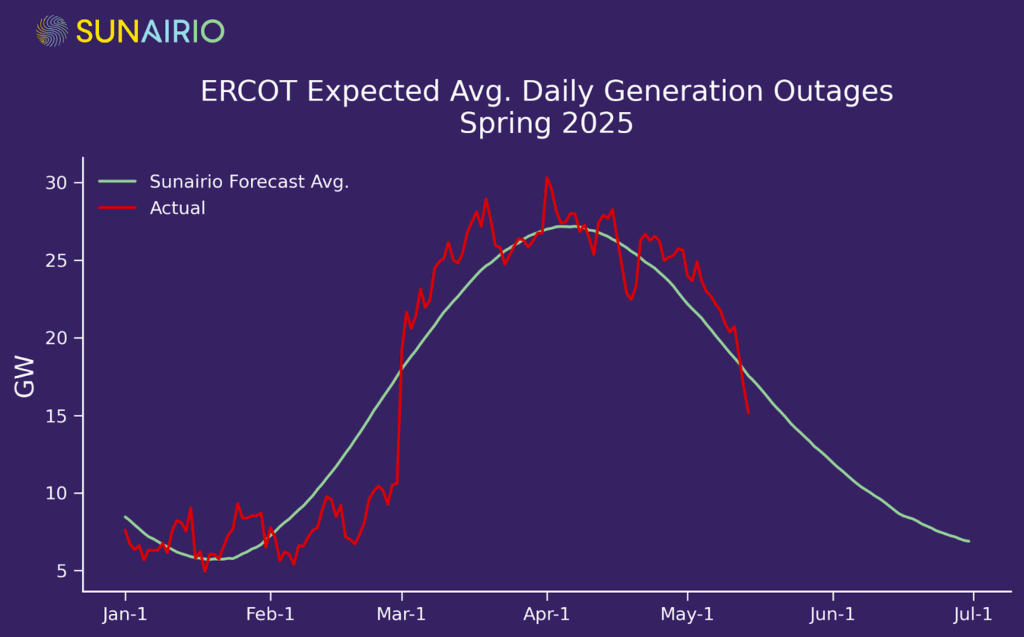
In spring, dispatchable resources are often not available on purpose. Given that the majority of Texas spring weather is mild and that the season immediately precedes the peak demand summer months, generators schedule the bulk of their maintenance outages during this time. As we see in Figure 3, nonrenewable (thermal) generation outages usually peak in early April (coinciding with the mildest expected temperatures and lowest expected load), though unscheduled outages can cause significant variability. Ironically, such high levels of dispatchable unit outages can tip the grid from normal conditions into capacity shortfalls. Scheduling generation outages in spring makes sense, until it doesn’t.
Figure 3. Sunairio average forecast of daily nonrenewable generation outages in ERCOT (green) and actuals (red).
Renewables ramp up
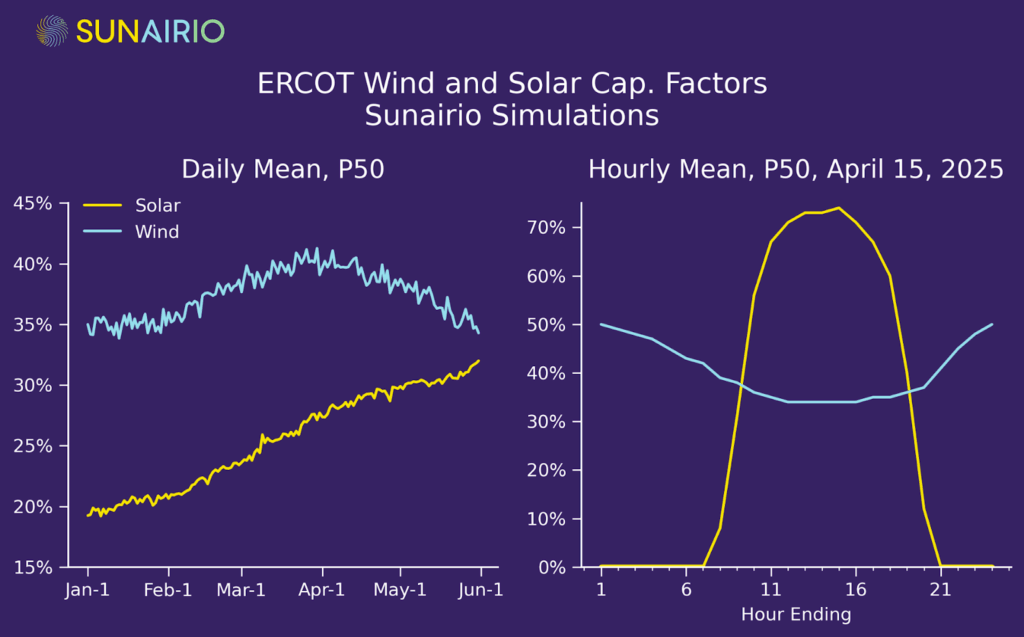
Temperatures and unit outages aren’t the only thing rising in ERCOT during spring. Wind generation typically maxes out in early April and solar generation typically increases by 38% from March 1 to May 31. Further complicating grid dynamics are intraday generation patterns, where wind generation peaks overnight and solar generation is dictated by the diurnal sunup-to-sundown cadence. Figure 4 plots both these seasonal (left panel) and intraday (right panel) trends.
Figure 4. Sunairio daily mean (left) and hourly mean (right) P50 wind and solar generation capacity simulations for ERCOT.
Implications for power markets and reliability
Understanding grid risk these days is much more than understanding a simple temperature -> load relationship. It’s a multidimensional puzzle whose solution is driven by correlated variability between load, wind generation, solar generation, and the availability of dispatchable resources. It’s sensitive to temperature extremes, shifts in renewable generation patterns, and unit outages.
At Sunairio, we combine these fundamentals into one metric that provides a reliable indicator of overall grid stress — the Grid Stress Index (GSI), which measures the ratio of Net Demand (load minus renewables) to Available Dispatchable Capacity (read more about the construction of GSI here).
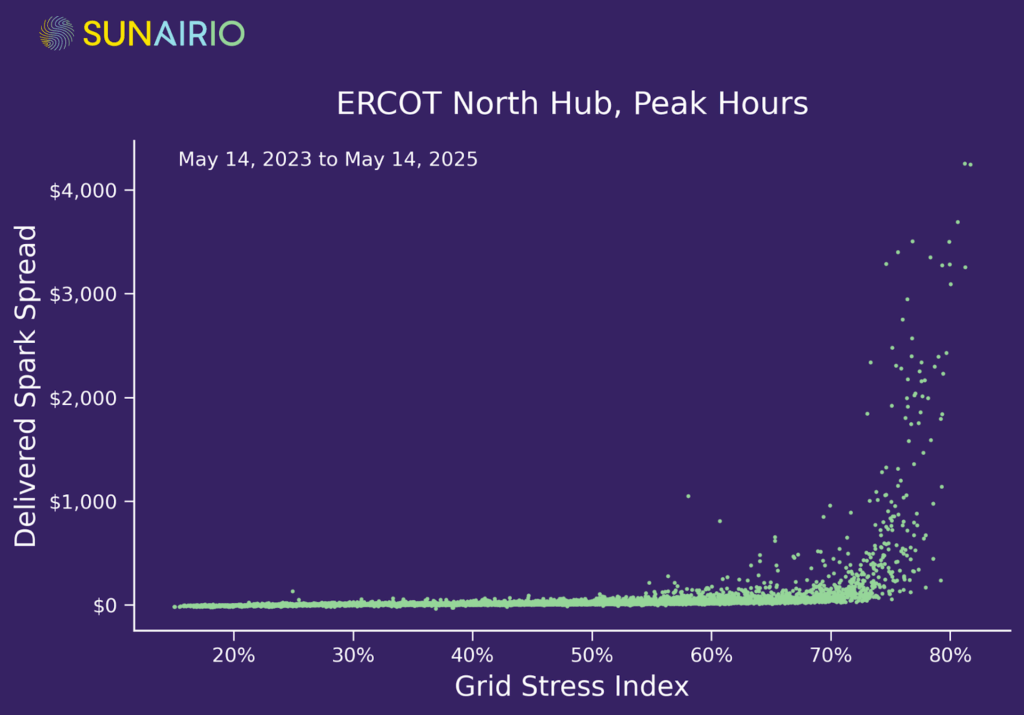
As Figure 5 shows, this metric anticipates hourly price volatility, with conditions in ERCOT (measured by delivered spark spreads) being relatively tame until GSI surpasses 60% — and becoming extremely volatile as GSI rises above 70%.
Figure 5. The ERCOT Grid Stress Index (GSI) vs. hourly delivered spark spreads at North Hub. Spark spreads are calculated with a 6.5 heat rate and a local Texas delivered gas index.
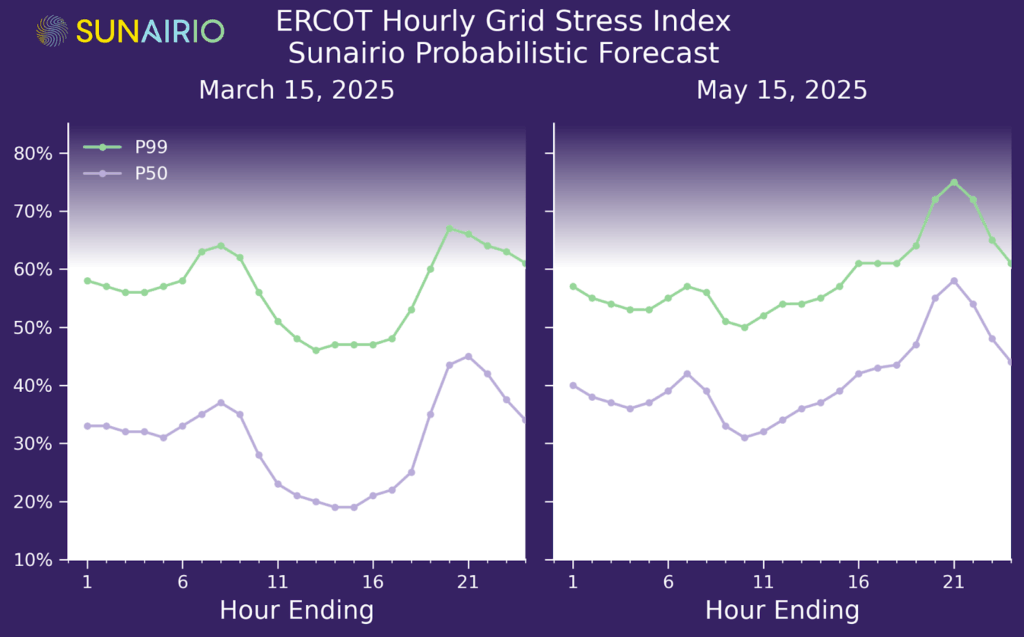
To understand grid risks on spring days, we use Sunairio’s historical simulations in Figure 6 to plot expected (P50) and extreme (P99) hourly GSI in both early (March 15) and late (May 15) spring 2025. For clarity, we shade the background darker above GSI = 60% to reflect increasing price risk. As the plot shows, while the majority of hourly conditions in spring fall below the 60% level corresponding to high prices/capacity shortages, extremes in several hours present significant risks.
In particular, cold mornings and low renewables can drive hours ending (HE) 7–9 to the danger zone in early spring (left panel, Figure 6), while afternoon heat and decreasing solar in the evening drives HE 20–22 even further beyond in late spring (right panel, Figure 6).
Figure 6. P50 and P99 hourly ERCOT Grid Stress Index for March 15, 2025 (left) and May 15, 2025 (right) from historical Sunairio probabilistic forecasts. Background shaded above GSI=60% to reflect increasing price risks.
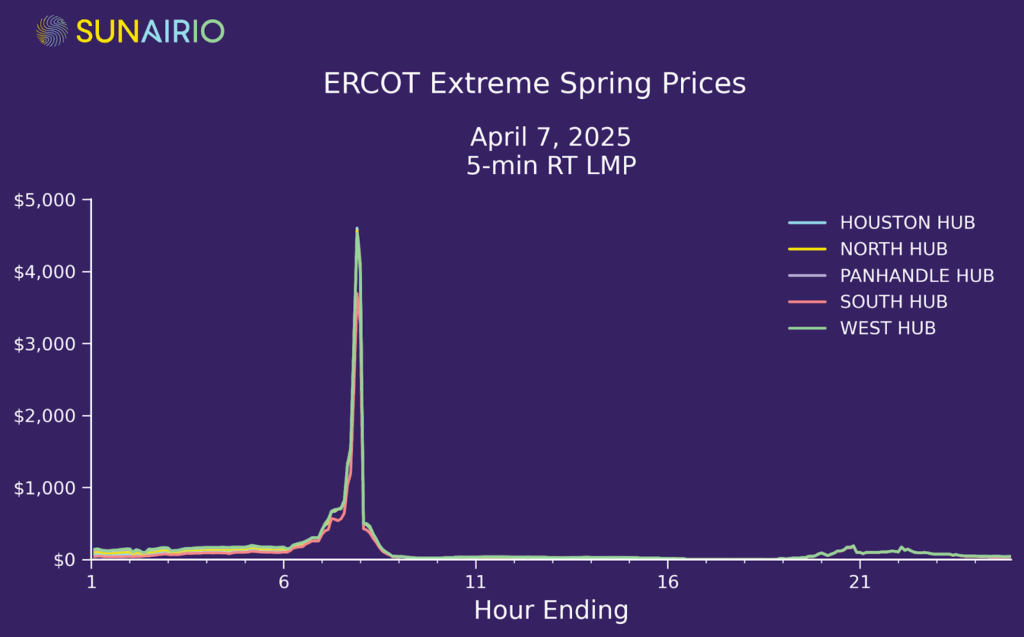
Indeed, on the exceptionally cold early spring ERCOT morning this year (April 7), we saw prices spiking close to the price cap in ERCOT and averaging $1,552/MWh in an hour (Figure 7) due to high GSI resulting from exactly this combination of low temperatures (dipping into the 30ºFs surrounding Dallas, low renewables (minimal solar at HE7), and high generation outages (25+ GW).
That one hour on April 7 added approximately $4/MWh to the monthly peak price, meaning that just 0.2% of hours in the April peak contract (1/352) accounted for 10% of the entire contract value.
Figure 7. Five-minute LMP for ERCOT market hubs on April 7, 2025.
Looking ahead to 2026
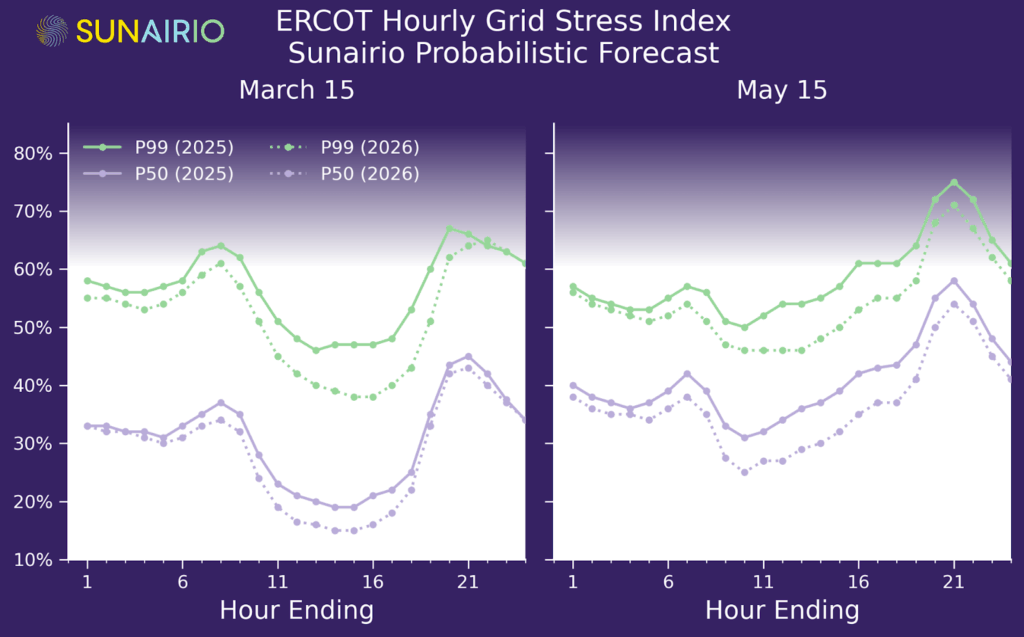
With the spring drama almost behind us for 2025, what should we expect next year? Accounting for load growth and new unit additions/retirements, we find that conditions should generally be calmer next year across all spring hours. In other words, generation additions will outpace load growth — though the risk of acute price spikes remains, especially in the evening. As Figure 8 shows, P50 and P99 hourly GSI in both early spring (March 15) and late spring (May 15) are expected to be lower in 2026 compared to 2025, representing downside risk to ERCOT market prices.
Figure 8. P50 and P99 hourly ERCOT Grid Stress Index (GSI) for March 15 (left) and May 15(right) in 2025 and 2026 according to Sunairio probabilistic forecasts.
Navigating spring volatility
Spring volatility highlights the challenges of managing grid and energy markets risk without a robust framework for evaluating the jointly correlated, multidimensional, granular, and skewed nature of the electric grids. To effectively navigate this period, grid planners and energy traders need to understand the complicated interplay between averages and extremes — to expect not just the seasonal trends but also to expect extreme events that drastically alter reliability and economic outcomes. It’s not enough to know that ERCOT grid balances for HE 7 typically don’t present much of a risk. We need to quantify the risk — via, for example, stochastic simulations — that weather and grid conditions conspire to drive capacity reserves low and market prices to the moon (as they did during HE 7 on April 7, 2025).
Generating ENSO-informed Climate Simulations
Introduction
“Prediction of instantaneous weather patterns at sufficiently long range is impossible.” This statement from Edward Lorenz remains as true today as when it was first written by the chaos theory founder in 1982, with current numerical weather prediction (NWP) model skill rapidly decreasing to zero over the course of a couple of weeks (Figure 1, also see Zhang 2018).
Figure 1: Prediction skill for temperature in the Northern Hemisphere of leading NWP models over time. NCEP=American model, ECMWF=European model (Source ECMWF)
Although attempts to make deterministic predictions of localized and instantaneous weather devolve into chaos within a two week forecast horizon, it is possible to meaningfully predict large-scale atmospheric phenomena on seasonal time scales (several months to a year). These model predictions, however, need to be carefully processed before use–as the ECMWF states, “use of the raw numerical forecast products without interpretation is not recommended” (ECMWF 2021).
In this blog post, we (1) discuss one of the most impactful large-scale climate phenomenon (the El Niño - Southern Oscillation), (2) describe how Sunairio performs statistical processing and model assimilation to incorporate the latest El Niño intelligence into our climate simulations, and (3) evaluate how the resulting ENSO-informed climate simulations compare to both historical patterns and NOAA’s seasonal-timescale Climate Forecast System (CFS).
El Niño - Southern Oscillation
The El Niño - Southern Oscillation (ENSO) cycle refers to periodic changes in sea level air pressure and sea surface temperature (SST) in the southern Pacific Ocean. It is typically measured by the mean sea surface temperature anomaly of the “Niño 3.4” region shown in Figure 2, left panel (known as the Niño 3.4 index).
In the United States, especially high Niño 3.4 values (an “El Niño event”) are associated with warmer and drier winter weather in the northern US as well as cooler and wetter winter weather in the southern US (Figure 2, right panel, Halpert 2014). On the other hand, especially low Niño 3.4 values (a “La Niña event”) are associated with cooler and wetter winter weather in the northern US as well as warmer and drier weather in the southern US.
Figure 2: Regions of ENSO sea surface temperature indices (left) and the typical weather pattern expected in winter due to an El Nino event (right) (Source NOAA)
As the ENSO cycle is the “strongest interannual signal in the global climate system” (Tang 2018), it is heavily studied and forecasted, with current models showing positive predictive skill 6-12 months out (Barnston 2012). Figure 3 shows historical values of the Niño 3.4 index (left) and predictions from the CFS (right).
Figure 3: Historical Nino 3.4 region sea surface temperature anomaly (left) and current forecast of Nino 3.4 SST anomalies from the NOAA CFS (right)
Creating ENSO-aware Sunairio Simulations
Surveying the predictive power of current weather science, we find that high-resolution NWP models are predictive for at most 15 days, medium-resolution predictions of the ENSO cycle are predictive for 6-12 months, and low-resolution models of long-term climate trends can be predictive for longer time periods.
Figure 4: Schematic of the time periods and weather dynamics that various weather models exhibit predictive skill.
Sunairio’s climate simulations aim to therefore combine the best-available intelligence at each time horizon: long-term climate trends from the latest climate models (CMIP6), medium-term ENSO predictions from NOAA, and simulated hourly anomalies from Sunairio’s proprietary stochastic simulation generator.
Concretely:
Sunairio simulates 1,000 probabilistic hourly climate-trend aware weather paths from 15 days to 15 years (picking up where the NWP models lose skill) as correlated anomalies from climatological means that reflect historical weather patterns and adjust for CMIP6 climate trends.
Sunairio generates 1,000 probabilistic ENSO paths over a 12-month time horizon by extrapolating a range of outcomes from the latest 40 CFS model runs (4 runs per day times 10 days) (Figure 5, left panel).
Sunairio derives, from historical data, the correlation and effect of Niño 3.4 Index values on local weather variables throughout the year (Figure 5, middle panel).
Sunairio links hourly weather simulations (1) with ENSO paths (2)–and adjusts the simulated weather according to the corresponding Niño 3.4 index effect (3)(Figure 5, right panel).
Figure 5: Left panel: percentiles of 12-month simulated Niño 3.4 Index (seeded from the CFS). Middle panel: Impact of Niño 3.4 Index on Temperature (2m) at DFW airport. A +3σ Niño 3.4 Index (strong El Niño event) in April, for example, leads to temperatures 1.5C lower than typical averages. Right panel: mean impact on temperature at DFW of ENSO adjustments in simulations, given the simulated Niño 3.4 index paths in the left panel.
Inspecting the January 2025 ENSO-informed Sunairio climate simulations in Figure 5, for example, we find that the median ENSO forecast is approximately -1σ (left panel), that the corresponding ENSO temperature effect at DFW is approximately +0.5oC (middle panel), and that the ENSO adjusted Sunairio simulations at DFW are indeed approximately +0.5oC warmer than January 2025 climatology (right panel).
Do Sunairio’s ENSO-adjusted Weather Simulations Reproduce Expected ENSO Effects Across Multiple Geographies and Weather Variables?
In this section, we verify that Sunairio simulations appropriately reproduce the historical relationship between the Niño 3.4 index over CONUS for major weather variables (2m temperature, 100m wind speed, and irradiance).
At 191 weather stations across the contiguous United States, we performed a backtest in which we simulated local hourly weather adjusted with historical Niño 3.4 Index values between the years 1997-2022.
Dividing calendar years into seasons (Dec - Feb, Mar - May, Jun - Aug, and Sep - Nov), we then calculated the impact of a +1σ Niño 3.4 value with monthly simulated weather averages at each site (Figure 7, right)–and compared these patterns to the historical (1950-2023) relationship between Niño 3.4 deviations and monthly weather averages (Figure 6, left). As we can see in Figure 6, Sunairio simulations accurately reproduce the historical ENSO relationship. (Click the weather variable headings to select different plots.)
Figure 6: Historical (left) and simulated (right) relationships between weather variables and Niño 3.4 index values. A positive +1σ Niño 3.4 index in winter, for example, tends to cause a 1 oC increase in monthly 2m temperature in Minnesota. Sunairio simulations faithfully reproduce historical relationships.
As Sunairio simulations combine skillful ENSO predictions with high-fidelity climate simulations, medium-term Sunairio simulations are actually more predictive of future local weather than the CFS.
We validated this result by comparing historical monthly mean temperature measurements at the same 191 weather stations to both CFS predicted means and Sunairio simulated means. We found Sunairio simulations to be more predictive than CFS counterparts at 60% of the weather stations with an average skill score improvement of 2.1%.
Incorporating high-fidelity climate modeling, in other words, makes Sunairio simulation averages more predictive than the CFS.
Conclusions
Reviewing the sections above, we find that:
The El Niño – Southern Oscillation (ENSO) cycle is strongly correlated with global weather patterns.
While deterministic models cannot predict instantaneous weather beyond a 15-day time frame, the Niño 3.4 Index can be forecast with some skill over a seasonal (6-12 month) time frame.
Sunairio incorporates the latest intelligence on climate trends (CMIP6) and Niño 3.4 (CFS) predictions into its weather simulations.
Sunairio simulations accurately reproduce the historical relationship between ENSO and local weather.
Sunairio simulations, by combining high-fidelity climate simulation with a predictive ENSO signal, are more predictive of weather means than seasonal weather models.
Finally, we note two additional advantages of high-resolution Sunairio simulations over the CFS. First, Sunairio simulations can be generated at arbitrary locations, while CFS predictions must be interpolated from a 56km horizontal-resolution grid. Second, while seasonal forecast models like the CFS only offer one possible view of future weather in the medium term, Sunairio simulations offer 1000 paths of future weather for the next 15 years. As such, Sunairio weather simulations can be used to derive probabilistic risk distributions for commercial applications.
References
Barnston, Anthony G., Michael K. Tippett, Michelle L. L'Heureux, Shuhua Li, and David G. DeWitt. "Skill of Real-Time Seasonal ENSO Model Predictions during 2002–11: Is Our Capability Increasing?". Bulletin of the American Meteorological Society 93.5 (2012): 631-651.
ECMWF. “ECMWF System 4 user guide.” 1.1 (2011): 1-41.
ECMWF “SEAS5 user guide.” 1.2 (2021): 1-44.
Halpert, M. “United States El Niño Impacts.” NOAA (2014).
Lorenz, Edward N. "Atmospheric predictability experiments with a large numerical model." Tellus 34.6 (1982): 505-513.
Saha, Suranjana, Shrinivas Moorthi, Xingren Wu, Jiande Wang, Sudhir Nadiga, Patrick Tripp, David Behringer, Yu-Tai Hou, Hui-ya Chuang, Mark Iredell, Michael Ek, Jesse Meng, Rongqian Yang, Malaquías Peña Mendez, Huug van den Dool, Qin Zhang, Wanqiu Wang, Mingyue Chen, and Emily Becker. "The NCEP Climate Forecast System Version 2". Journal of Climate 27.6 (2014): 2185-2208.
Tang, Youmin, Rong-Hua Zhang, Ting Liu, Wansuo Duan, Dejian Yang, Fei Zheng, Hongli Ren, Tao Lian, Chuan Gao, Dake Chen, Mu Mu. “Progress in ENSO prediction and predictability study.” National Science Review 5.6 (2018): 826–839.
Zhang, Fuqing, Y. Qiang Sun, Linus Magnusson, Roberto Buizza, Shian-Jiann Lin, Jan-Huey Chen, and Kerry Emanuel. "What Is the Predictability Limit of Midlatitude Weather?". Journal of the Atmospheric Sciences 76.4 (2019): 1077-1091.
ERCOT Summer 2024 and the Grid Stress Index
Overview
What’s the best way to model power market dynamics that drive energy prices?
In this blog post, we review traditional models via generation stacks, introduce a Dispatchable Capacity Utilization (“DCU”) model as a way to modernize traditional approaches for renewable growth and contemporary market realities, and finally show how Sunairio’s proprietary Grid Stress IndexTM version of the DCU model performs by comparing actual summer 2024 electricity prices in Texas (ERCOT) to pre-season electricity price estimates generated using Sunairio’s Grid Stress IndexTM DCU model.
The Traditional Approach: Grid Dispatch and the Generation Stack
Regional power grids are in balance between supply (generation and imports) and demand (customer load and exports). To minimize unnecessary costs, regional grid operators continually dispatch the least-cost mix of generation that meets demand while accounting for both physical constraints (e.g. transmission line capacity) and techno-economic constraints (e.g. minimum unit run times, minimum reserve requirements).
Reflecting this least-cost mandate, regional energy prices are traditionally modeled via an idealized generation stack supply curve that assumes that all resources are dispatchable and ignores congestion and losses.
In Figure 1, for example, a demand of 4,000 MW would correspond to a least-cost generation mix that first dispatches all wind, solar, and hydrothermal generation and then dispatches a portion of combined-cycle gas generation. The marginal energy price would correspond to the marginal cost of combined-cycle gas generation ($25).1
Figure 1. Hypothetical generation supply curve by plant type
This traditional model was developed at a time when most power generation resources were generally assumed to be available 24x7 because traditional thermal generators (nuclear, coal, gas, oil) are inherently dispatchable. Unfortunately, not all generation resources are dispatchable and actual plant capacity varies at any point in time. Power plants have outages and maintenance; wind and solar generation potential is weather-dependent. The widths of the blocks in Figure 1 (and thus the capacity vs price relationship) is constantly in flux.
A Modern Approach to Modeling the Power Grid Supply/Demand Balance: The Dispatchable Capacity Utilization Model
To modernize the traditional formulation of price as a function of demand, we first remove non-dispatchable renewables from the supply curve and instead net them against demand. The resulting measure of effective demand, net demand, is then the amount of energy that needs to be met with dispatchable capacity.
Net demand = Demand - (Non-dispatchable Renewables)
To normalize across periods with different demand levels and available capacity, we then transition from raw energy space to percentage space. A net demand of 7,000 MW when the grid has 10,000 MW of dispatchable capacity, for example, is modeled as 70% utilization of dispatchable resources.
Net Demand / Dispatchable Capacity
Next, we adjust the dispatchable capacity by the amount of generation outages to yield available dispatchable capacity, giving us
which is a single metric ranging from 0% to 100%, that describes the utilization of the power grid.
Finally, we map this metric to delivered spark spread prices instead of raw marginal prices, which normalizes for the effect of changing fuel prices. We assume a standard heat rate of 6.5 MMBtu / MWh
The Relationship Between Dispatchable Capacity Utilization and Market Prices
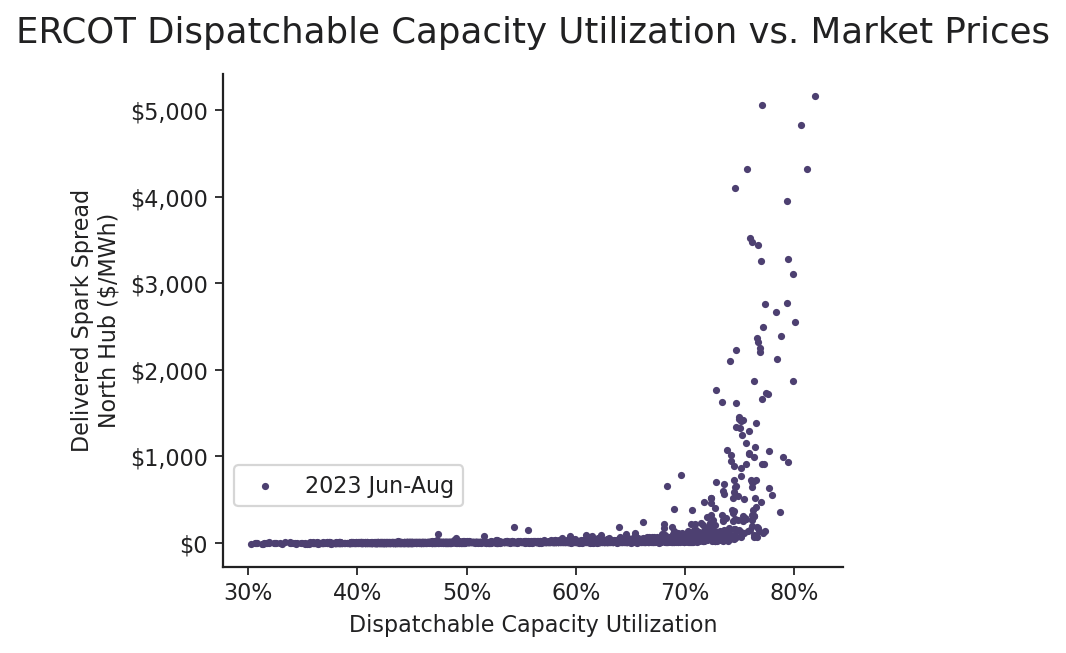
Moving from theory to practice, Figure 2 plots delivered spark spreads as a function of GSI or just DCU for all hours June-August 2023.
The relationship looks very similar to the idealized marginal supply curve (Figure 1). We can clearly see a slow rise in marginal cost followed by an inflection point around 75% available dispatchable capacity utilization, after which prices rise swiftly. Interestingly, the extremes of this plot are higher than those modeled by the traditional approach, as prices are often well above physical fuel costs (reflecting scarcity-seeking behavior from market participants). Putting this together, we’ve effectively learned the true ERCOT marginal supply curve without actually modeling the individual unit generation stack.
Figure 2. ERCOT dispatchable capacity utilization vs spark spread.
Using the Sunairio Ensemble to Forecast Dispatchable Capacity Utilization
Now that we’ve established the fundamental relationship between dispatchable capacity utilization and energy prices, we note that realistic simulation of this measure requires correctly producing inputs that are probabilistic (replicating extreme events at the correct likelihood) and fully correlated (replicating the correct joint distribution of load, renewables, and generation outages). As the Sunairio ensemble is purpose-built for this task, our forward-looking Grid Stress IndexTM DCU model can provide a highly realistic forecast of regional power grid stress.
For example, in order to present an up-to-date view of supply and demand resources, we update installed capacity projections monthly and retrain/re-forecast energy models hourly.
As we can see from Table 1, there are currently significant trends in both installed generation capacity and demand, making the downstream effect on the hourly dispatchable capacity utilization complicated to anticipate.
Installed Capacity
2023 Jun-Aug
2024 Jun-Aug
Change
Wind
37.7 GW
39.6 GW
+1.9 GW
Solar
16.6 GW
27.1 GW
+10.5 GW
Non-renewable
89.2 GW
90.3 GW
+1.1 GW
Battery
2.6 GW
7.2 GW
+4.6 GW
Average Load Growth
+7%
Table 1. Generation capacity and load growth trends, ERCOT 2024 vs 2023
What Did Sunairio Say About ERCOT Summer 2024 Grid Risks?
To benchmark Sunairio ERCOT simulations against historical realizations, we compared our pre-summer simulated distribution of Grid Stress Index to the actual distribution from June through August 2024. 2
Figure 3 (left) presents the distribution of forward-looking Sunairio simulations from May 3, 2024 (blue line) against actual distribution (green histogram). The fit is quite close, implying that Sunairio GSI forecasts from early May accurately reflected the various risks to the hourly Grid Stress Index (alternatively, one can interpret this fit as an indication that ERCOT June-August 2024 hourly grid balances were distributed close to expectations).
Figure 3. Forecasted and Actual ERCOT hourly Grid Stress Index distribution, June through August 2024.(Left) Actual 2023 and 2024 ERCOT hourly Grid Stress Index distribution(right).
Comparing the 2023 and 2024 historical distributions of the Grid Stress Index (Figure 3, right), we see that the ERCOT market was much tighter in 2023 than in 2024. In particular, 2024, had far fewer hours in the high-priced regime above 75% available dispatchable generation utilization–a shift that we see ultimately reflected in realized prices too (Figure 4):
Figure 4. Hourly North Hub delivered spark spreads as a function of the Grid Stress Index, June-August 2023 and 2024.
North Hub Delivered Spark Spread (6.5HR)
2023 Jun-Aug Actual
2024 Jun-Aug 5/3/24 Market
2024 Jun-Aug Actual
2024 Actual vs 5/3/24 Market
2024 Actual vs 2023 Actual
Peak ($/MWh)
$153.63
$112.85
$29.00
-$83.85
-$124.63
Off-peak ($/MWh)
$27.09
$45.06
$14.95
-$30.11
-$12.13
7x24 ($/MWh)
$86.69
$76.79
$21.47
-$55.32
-$65.22
Table 2. Realized and forward market (on 5/3/24) spark spreads
Looking at Table 2, we note that 2024 realized prices were not only much lower than their 2023 counterparts but also much lower than pre-season market forward prices. Sunairio pre-season ERCOT forecasts at that time, however, were much closer. In other words, Sunairio forecasts are excellent predictors of 1-3 month-forward grid balances and are also effective market signals of significant downside to energy prices relative to the same period from 2023.
Conclusions
Dispatchable capacity utilization is an improved metric for modeling power grid supply-demand balances that inherently accounts for renewables variability and unit outages.
Sunairio’s Grid Stress Index DCU model provides forecasts of historical distributions that are very consistent with the actual distributions.
The hourly distribution of the Grid Stress Index showed that the June-August 2024 period in ERCOT had significantly less risk of high-priced hours compared to the same period in 2023.
Sunairio forecasts of summer ERCOT grid balances–generated in May 2024–were an extremely accurate forecast of actual grid conditions.
Sunairio forecasts from May 2024 were an accurate signal of downside price risk in ERCOT for the June-August 2024 period relative to the same period from 2023.
Battery storage will also appear in the supply stack at varying marginal costs depending on their cost of charging and their efficiency. ↩︎
The conventional power market definition of summer is limited to July-August, though we add June as well in this analysis to increase sample size. ↩︎
Sunairio and Grid Stress Index are the trademarks of Sunairio, Inc.
Volcanic Aerosols: A Threat to Solar Production that Historical Satellite Data Doesn’t See
Introduction
During a major volcanic eruption, powerful volcanoes may launch sulfur gas high into the stratosphere, where it can form long-lasting aerosols persisting on time scales from months to years. These clouds of aerosols then diffuse into a layer that can cover the globe. Studies have shown that this process can result in a severe reduction of surface solar irradiance and reduce clear sky irradiance by as much as 13 percent (Robock 2000), with significant implications for solar PV production [Robock 2000, Bluth 1992, Hay and Darby 1984].
Obviously, the threat of these months to years-long volcano-induced periods of low solar irradiance presents a major risk to solar investor profitability and regional power grid reliability. However, these risks aren’t typically considered when investors and planners calculate expected production variability from new (or existing) utility-scale solar sites–primarily because conventional risk assessment approaches rely on a limited sample of historical irradiance data that coincidentally corresponds to a time period (beginning in 1998) without any of the major volcanic events that have affected North America.
A Limited Historical Record of Irradiance Data
Due to the dearth of high-quality ground station solar irradiation measurements, the solar industry has come to rely on remote sensing data from geostationary satellite missions. Irradiance data from geostationary satellites is available starting in 1998. The resulting tradeoff between data quality and data breadth caused by this exclusive reliance on satellite data for production risk assessment evinces itself as a major gap in understanding just how low solar production can be if and when the next planetary scale volcanic eruption occurs.
To put volcanic eruption risks to solar production into context, we estimate (as shown below) that volcanic aerosols can produce annual solar irradiance deficits 5 standard deviations below the satellite record estimate. In other words, using data from 1998-2023 to estimate an annual solar irradiance probability distribution at a solar site (as is commonly done today), a major volcanic eruption could lead to a year of observed solar irradiance 5 standard deviations lower than the mean expected value. Naïvely, a 5-sigma deviation is extremely unlikely: for example, if we assumed that annual irradiance was normally distributed, a 5-sigma event should happen on average 1 in 3.5 million years.
Yet we know that these risks are much more common–two eruption events occurred between 1982 and 1991–meaning that deriving a measure of irradiance variability using only the 1998-forward satellite record probably underestimates volcano risk. The industry, in effect, may be prioritizing short timescale accuracy at the expense of long-term risk assessment.
El Chichón and Pinatubo
The last fifty years have seen two eruptions with large scale persistent impacts to irradiance. The eruption of El Chichón in 1982 accelerated roughly 7 million tons of sulfur dioxide to atmospheric heights of over 22 kilometers. The eruption of Mt. Pinatubo a mere 9 years later resulted in a 35 km high plume of 20 million tons of sulfur dioxide (Bluth et al. 1992). Both plumes became entrained in the atmosphere, reacted with water vapor, and spread out to form reflective bands of sulphuric acid aerosols that encircled the globe within roughly three weeks and persisted for up to 3 years after their respective eruptions.1
Although satellite data is not available before 1998, the Mauna Loa observatory in Hawaii captured the impact of these global aerosol blankets on solar irradiance through measurements of the apparent transmission of the atmosphere during hours with clear skies. The data, presented in Figure 1, shows clear sky irradiance dropping by more than 13% due to the impact of El Chichón in 1982 and 11% due to the impact of Pinatubo in 1991.
Figure 1: Apparent transmission (an estimate of the fraction of solar irradiance that is able to pass through the atmosphere during clear hours) measured at Mauna Loa Observatory. Figure from the Global Monitoring Laboratory (https://gml.noaa.gov/grad/mloapt.html)
To understand how these reductions in irradiance impacted the solar resource in the US, we aggregated surface solar irradiance from the ERA52 dataset in the southwestern states (CA, UT, CO, NV, AZ, NM) from 1950-2023. We found that the 4 years with the lowest mean irradiance on record followed these eruptions. When compared to the period since 1998, the year following El Chichón had an irradiance deviation of -5.3 𝝈; the year following Pinatubo had an irradiance deviation of -3.8 𝝈.
10 Lowest Surface Solar Irradiance Years: ERA5 1950-2023 (Avg of CA, UT, CO, NV, AZ, NM)
Rank
Year
Mean Annual GHI (W/m2)
Mean Annual GHI 1998-2023 (W/m2)
𝝈1998-2023
Notes
1
1983
221.5
234.9
-5.3
Year after El Chichón
2
1982
225.4
234.9
-3.8
El Chichón
3
1992
225.4
234.9
-3.8
Year after Pinatubo
4
1984
227.0
234.9
-3.3
2 years after El Chichón
5
1986
227.7
234.9
-2.9
6
1981
228.6
234.9
-2.5
7
1957
229.0
234.9
-2.3
8
1991
229.6
234.9
-2.1
Pinatubo
9
1987
229.9
234.9
-2.0
10
1998
230.3
234.9
-1.8
Table 1: 10 Years with the lowest mean annual GHI in the southwestern US during 1950-2023. 𝝈1998-2023 is the number of standard deviations removed from years in which satellite data is available (1998-2023). Years impacted by El Chichón are shaded in red, years impacted by Pinatubo are shaded in orange.
To visualize these years within the full ERA5 date range, Figure 2 plots the time series of regional annual average solar irradiance from 1950-2023. Again, we see that the years following El Chichón and Pinatubo are the lowest, appearing as outliers compared to the 1998-forward satellite record range (consistent with the 3+ sigma measurements above).
Figure 2: Mean annual global horizontal irradiance (GHI) averaged over the southwestern United States. Years with volcanic eruptions are indicated by vertical lines.
Data Challenges and Future Risk
As seen above, volcanic eruptions can be an enduring hazard to solar production in the United States. However, because historic eruptions are not captured by the satellite record, they are often not accounted for during due diligence or planning exercises. Moreover, as the solar PV industry has not existed at scale for long enough to have meaningful first hand experience with volcanic eruption related deficits, empirical or even anecdotal evidence of their effects is rare.
Clearly, solar production risk assessments using only historical data since 1998 are not incorporating these relatively rare but impactful events. Yet the risk of the next major eruption over the next decade may be greater than the industry realizes. Estimates of major eruption frequency (Rougier et al. 2018, Sheldrake and Caricchi 2017, Pyle 1995), though imprecise, suggest that volcanoes at least as severe as Pinatubo and El Chichón may occur with a frequency of roughly 1 in 51 years (Sheldrake and Caricchi 2017)–corresponding to a 33% chance of occurrence during a 20 year solar project life cycle.
Sunairio Irradiance Simulations Reveal Long Tails Consistent with Volcanic Events
Overcoming the limitations of a small sample set when estimating risk is a key benefit of employing stochastic simulation methods. While grounded in high-quality satellite-based irradiance data, Sunairio’s stochastic climate simulations generate a wide range of realistic weather scenarios that can extrapolate beyond the limitations of a restricted date range, using statistical and machine learning methods to infer complex spatio-temporal relationships between weather variables, locations, and timepoints to create a broad data set from which to evaluate risk. Therefore, Sunairio’s simulations are both representative of local weather down to a few kilometers and useful for characterizing variability–including extreme events.
To demonstrate how Sunairio simulations can “see” weather risk beyond a limited historical record, we simulated 1,000 scenarios of hourly weather for 2024 at a location just outside of Albuquerque, New Mexico–using satellite-based irradiance data from 1998-2023. Figure 3 plots the annual average GHI of each of our simulations compared to two distributions from ERA5: the 1998-2023 period (satellite data period), and the full 1950-2023 period of record.
In the left plot of Figure 3 we see that the Sunairio simulations show a left skew (risk of low solar irradiance) that notably isn’t present in the 1998-2023 ERA5 distribution–but is present in the right plot of historical data since 1950, overlapping with the occurrence of major volcano years. Sunairio simulations, in other words, replicate the true tail of the historic distribution (including years with volcanic activity) which isn’t seen in the limited satellite data period.
Figure 3: Mean Annual GHI over 1,000 Sunairio simulations compared to mean annual GHI distributions derived from ERA5 for A) 1998-2023 (left) and B) 1950-2023 (right). Years impacted by the eruptions of El Chichón and Pinatubo are indicated by hatches.
Conclusions
In this case study we showed that:
Major volcanic eruptions such as El Chichón (1982) and Pinatubo (1991) can significantly reduce surface solar radiation by creating a planetary-scale band of sulphuric acid aerosols that persist in the atmosphere for years. The effect is well documented by Moana Loa station observations.
Traditional solar PV production risk estimates do not incorporate the risk of volcanic events because they derive annual risk estimates using satellite-based irradiance data (which starts in 1998).
The signatures of El Chichón and Pinatubo eruptions are apparent in ERA5 reanalysis data: the four lowest mean annual irradiance years (between 1950 and 2023) are either eruption years or years immediately following those eruptions.
Using the 1998-2023 satellite data period as the basis for risk estimates, volcanic eruption years appear to be 3- to 5-sigma events (i.e. extraordinarily unlikely)–contradicting the research on volcanic eruption frequency.
Sunairio’s simulations replicate low-irradiance years at a frequency consistent with the historic record and reanalysis estimates. Using Sunairio simulations of Albuquerque, NM for 2024, the likelihood of a year having mean annual GHI equivalent to the 1983 El Chichón year is roughly 2.3%.
Notes
Not all eruptions disrupt the climate on a planetary scale. The eruption of Mt. St. Helens in 1980 and, more recently, the eruption of Hunga Tonga–Hunga Haʻapai in 2022 both produced large explosions but failed to propel large quantities of SO2 into the stratosphere. Therefore, although they had catastrophic impacts on surrounding areas, the plume of aerosols were able to settle to the earth within a few weeks. ↩︎
Although ERA5 data is less accurate than satellite data, these errors are most extreme during cloudy conditions (Urraca 2018). Looking at states in the southwest (which have fewer cloudy hours) allows us to partially mitigate these errors. ↩︎
Citations
Bluth, G. J. S., et al. (1992) Global tracking of the SO2 clouds from the June 1991 Mount Pinatubo eruptions, Geophys. Res. Lett.
Hay, J. E. and Darby, R. (1984) El Chichón – influence on aerosol optical depth and direct, diffuse and total solar irradiances at Vancouver, B.C., Atmosphere-Ocean, 22:3, 354-368, DOI: 10.1080/07055900.1984.9649204
Pyle, D. M. (1995) Mass and Energy Budgets of explosive volcanic eruptions. Geophysical Research Letters; 22, 5 563-566.
Robock, A. (2000) Volcanic Eruptions and Climate. Reviews of Geophysics.
Rougier, J., et al. (2017) The global magnitude–frequency relationship for large explosive volcanic eruptions. Earth Planet. Sci. Lett.
Sheldrake T., and Caricchi L. (2017) Regional variability in the frequency and magnitude of large explosive volcanic eruptions. Geology; 45 (2): 111–114. doi: https://doi.org/10.1130/G38372.1
Urraca, R. et al. (2018) Evaluation of global horizontal irradiance estimates from ERA5 and COSMO-REA6 reanalyses using ground and satellite-based data. Solar Energy.
Sunairio Wins NSF Phase I SBIR Grant for New Climate Simulation Technology
Sunairio is excited to announce it has been awarded a National Science Foundation (NSF) Small Business Innovation Research (SBIR) Phase I grant. The NSF SBIR program, which selects less than 14% of applying startups, funds high-impact technological research and development (R&D) across a wide range of disciplines.
For Sunairio, the award will fund research into a new, highly scalable climate simulation engine that promises to generate climate insights for the energy sector at 1,000 times the resolution of traditional, physics-based global climate models, such as the ones which support the body of research conducted by the Intergovernmental Panel on Climate Change (IPCC).
Sunairio’s new climate simulation solution is a novel combination of generative AI and advanced statistics that early research shows can replicate forward-looking local (3-km x 3-km) hourly weather patterns and climate trends for up to 15 years. This approach will fill a technical and commercial gap because the traditional global climate models are very computationally intense and, therefore, only run at 100-km x 100-km, which isn’t sufficient to accurately model site-specific weather risk at wind and solar farms.